
LABS
4 Labs- 4 Topics
Each of the four Future Labs will focus on a migration issue:

Future Lab#1 AGING SOCIETIS
BERLIN
24-26 June 2026
The world is aging unevenly. While some regions remain demographically young, the Global North – Europe in particular – is facing a rapid contraction of its working-age population.
-
By 2050, for instance, over a third of Germany's population will be aged over 60, with the proportion of the very elderly (those over 80) rising to 10%. Consequently, shifting intergenerational dynamics, rising care needs and labor shortages mean that migration will be crucial to Europe’s future.
The first FutureLab (June 2026) in Berlin will focus on the role of mobility in aging societies, exploring different scenarios of how demographic change and migration might interact over the coming decades. The exploration will address deeper questions:
• What forms of mobility will emerge as Europe competes for younger talent?
• How will care systems function as domestic workforces shrink?
• How might social cohesion in Europe evolve as societies simultaneously age and become more diverse?
The Berlin FutureLab will examine developments affecting older people with limited mobility and increased care needs. And it will examine developments and implications for younger generations calling for a new intergenerational social pact and going beyond a purely utilitarian approach to migration.
Future Lab#2 CLIMATE CHANGE
ACCRA
17 Nov 2026
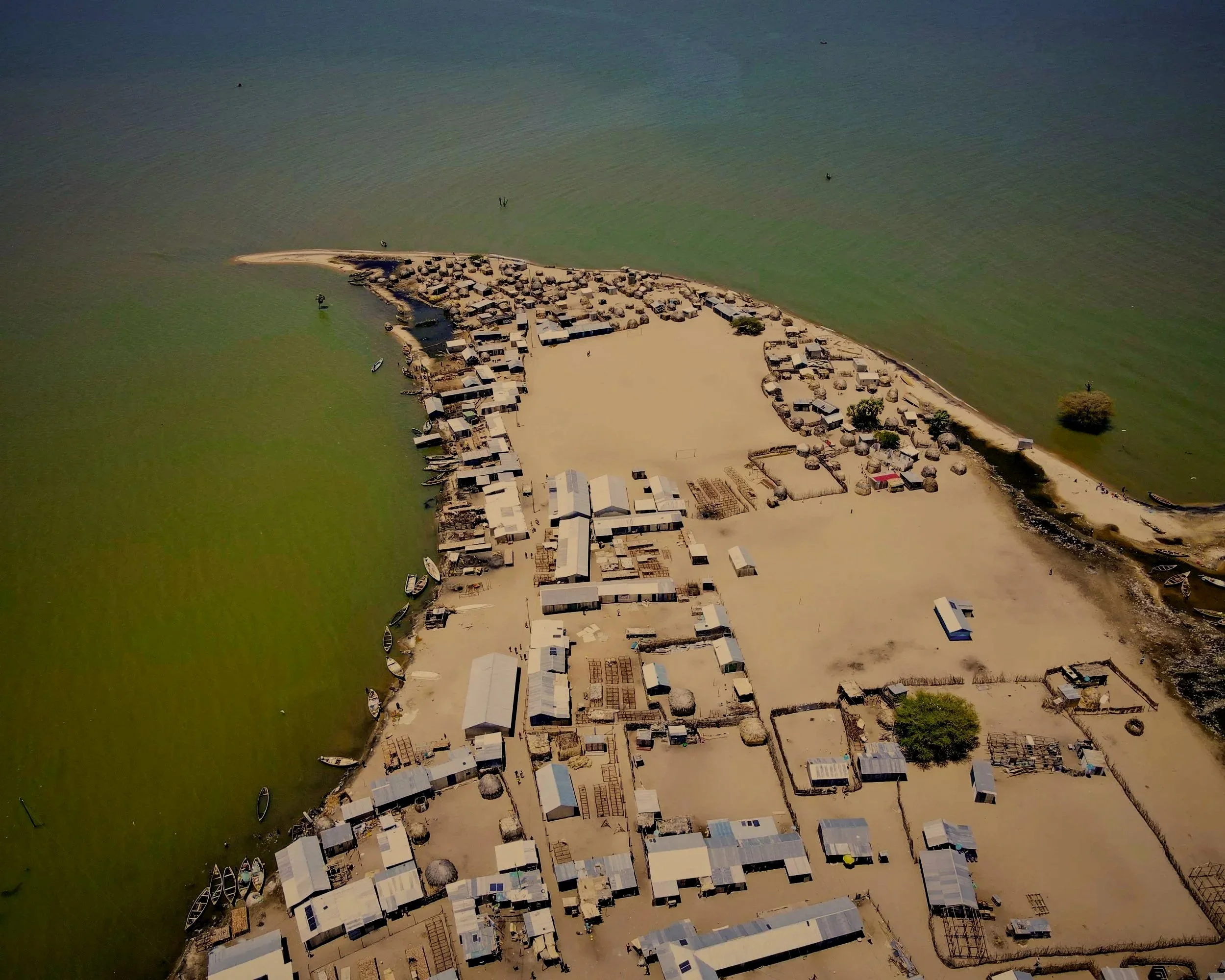
Climate change is not only altering landscapes—it is reshaping the conditions under which people decide where to live, how to move, and how to build futures in the face of accelerating environmental disruption.
-
Rising temperatures, erratic rainfall, coastal erosion and flooding are calling the habitability of entire regions into question and transforming the daily lives of their inhabitants. In many parts of Africa, for example, where infrastructure is often inadequate and climate shocks arrive with little warning, these pressures not only push people across borders, but also generate complex patterns of intra-regional and internal migration as families relocate temporarily, seasonally or permanently in search of safety, better livelihoods and stability.
In Accra, a city at the intersection of rapid urbanization and climate vulnerability, the second Future Lab (November 2026) will focus on the similarities and differences in mobility patterns influenced by climate change and explore what climate-related mobility might look like in the coming decades:
• To what extent can technology-driven adaptation measures in specific regions permanently delay tipping points?
• What international legal protection mechanisms and humanitarian corridors need to be developed for people who are trapped in uninhabitable areas and who remain invisible in the global migration discourse?
• How is the migration of young people from rural areas to globalized cities worldwide changing the labor market and housing situation in those cities? How will urban regions absorb or redirect movement?
The FutureLab in Accra creates space to map these possibilities and consider pathways toward more just and anticipatory responses to climate‑related mobility.

Future Lab#3 GLOBALIZING CITIES
SINGAPORE
25-27 April 2027
Mega‑cities worldwide are growing at a rapid pace. They are transforming the very conditions of mobility, opportunity, and (in)equality.
-
Residents of these burgeoning cities navigate dense traffic, polluted air, and overstretched systems, while the poorest often face mobility options no better than those of generations past.
While lower‑skilled migrants sustain the everyday labor that keeps urban structures running – often under precarious conditions – globalizing cities are particularly appealing to high-skilled knowledge workers and digital nomads from around the world.
The third FutureLab (April 2027) explores these tensions by asking how globalized cities will evolve in an era of instant connectivity and emerging virtual spaces:
• What happens to migration when work, services, and social life increasingly unfold online?
• How will cities manage the coexistence of hyper‑mobile elites and migrants whose movement is tightly constrained?
• What new forms of urban belonging or exclusion might emerge as digital and physical infrastructures intertwine?
Taking this as its starting point, the FutureLab in Singapore sets out to understand how urbanization, technology and migration will shape the next generation of global cities particularly in Asia.

Future Lab#4 PLACELESS WORK
TORONTO
25-27 Oct 2027
With advanced digital technologies enabling work from virtually anywhere, mobility is no longer solely driven by economic necessity, family connections, or environmental factors.
-
Individuals are starting to move – or choose not to move – because their jobs come along with them. Digital nomadism is transforming migration in ways that traditional models cannot fully capture, blurring the distinctions between migration, mobility, and remote presence.
This shift raises important questions for migration research:
• What does it mean to migrate if your livelihood isn't tied to a specific location?
• How do communities and our sense of community change when some people are highly mobile while others remain rooted but globally connected?
• How do governments and social systems adapt to people whose work, identity and sense of belonging span multiple borders in real time, and who are not confined to a single physical location?
The fourth FutureLab (October 2027) in Toronto views digital nomadism as a significant force shaping the future of mobility. Participants are encouraged to investigate how instant connectivity and platform-based work are changing the reasons why in the future people move, or don't move any more.