
future imaginaries
of migration

Together we will explore how mobility and migration will shape societies in the context of
aging societies
FUTURE LAB #1
BERLIN / Germany
24 - 26 June 2026

climate change
FUTURE LAB #2
ACCRA / Ghana
17 Nov 2026
globalizing cities
FUTURE LAB #3
SINGAPORE
25 - 27 April 2027

placeless work
FUTURE LAB #4
TORONTO / Canada
25 - 27 Oct 2027
Research
meets Arts
meets Future Thinking
from problems to prospects
from past to future thinking
from local context to global connections
4
future labs
4
continents
200+
co-creators
∞
ideas
The Future Potentials of Migration
plausible ideas
This international, interdisciplinary initiative invites participants to exchange future ideas on migration and the possibilities of human mobility as a contribution to social progress. By imagining, critically analyzing, and further developing plausible future scenarios for human mobility 25+ years from now, we move beyond the 'mode connu’ of current migration debates.
related challenges
Proactively addressing interconnected challenges of the future and the role that migration can play in them, we explore specific scenarios and contexts: migrants and their role as part of aging societies; the importance of human mobility in the light of climate change; the globalization of cities and their populations; and the rise of location-independent work and a mobile workforce.
creative thinking
Combining the latest migration research with creative methods from art, future studies as well as AI-powered tools, the project will create new Future Imaginaries of Migration — ideas going beyond what we take for granted today or consider possible.
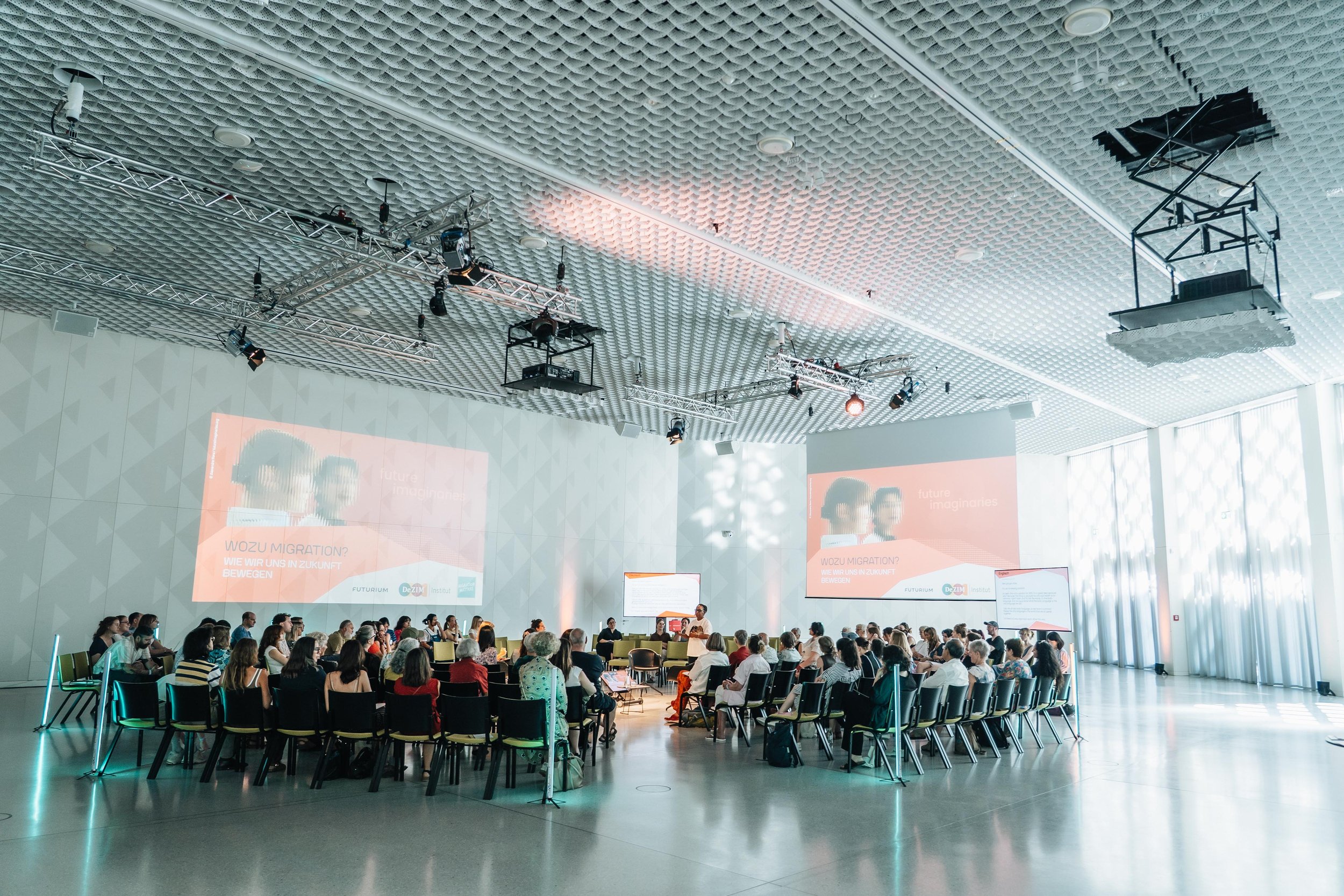
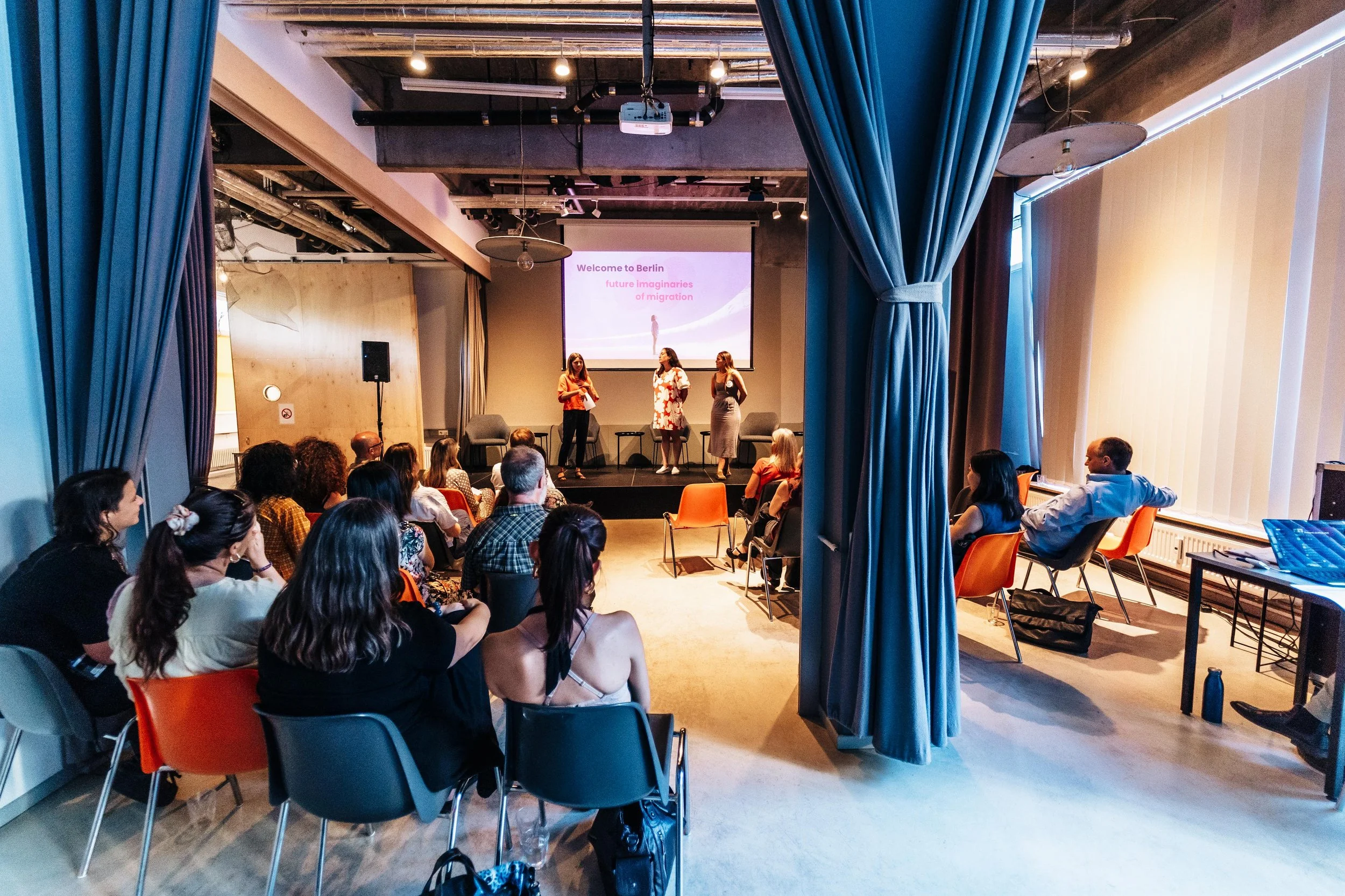
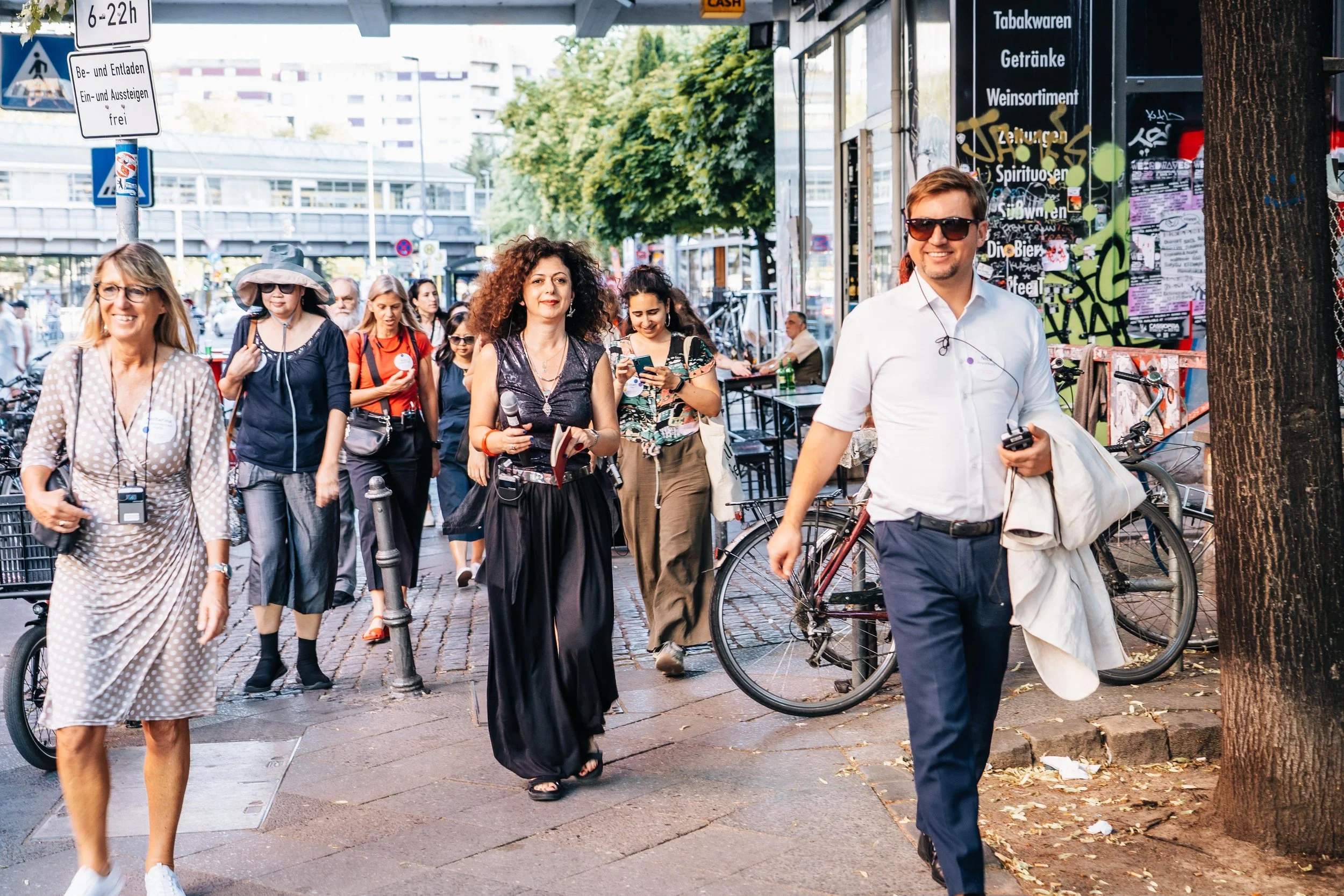
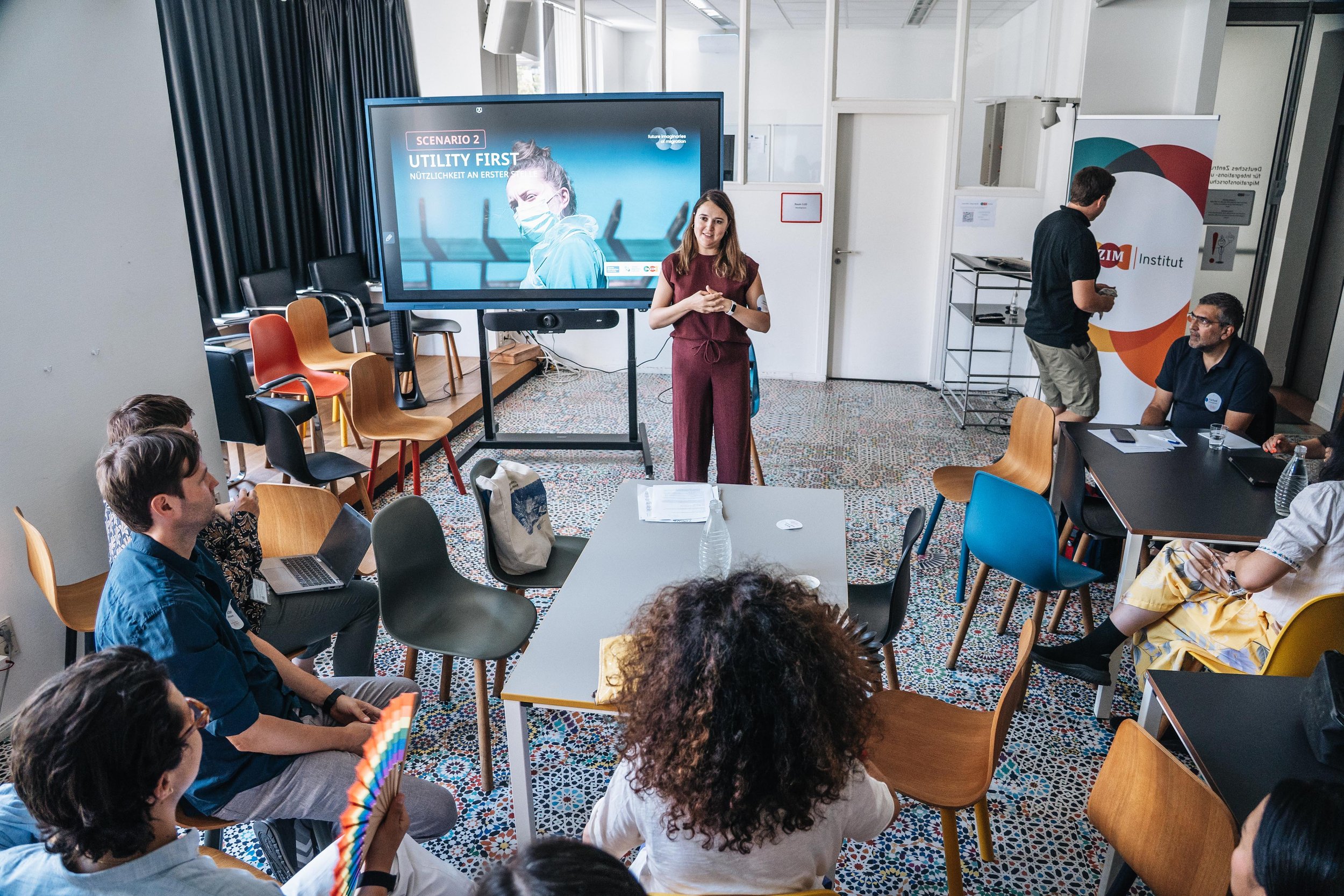
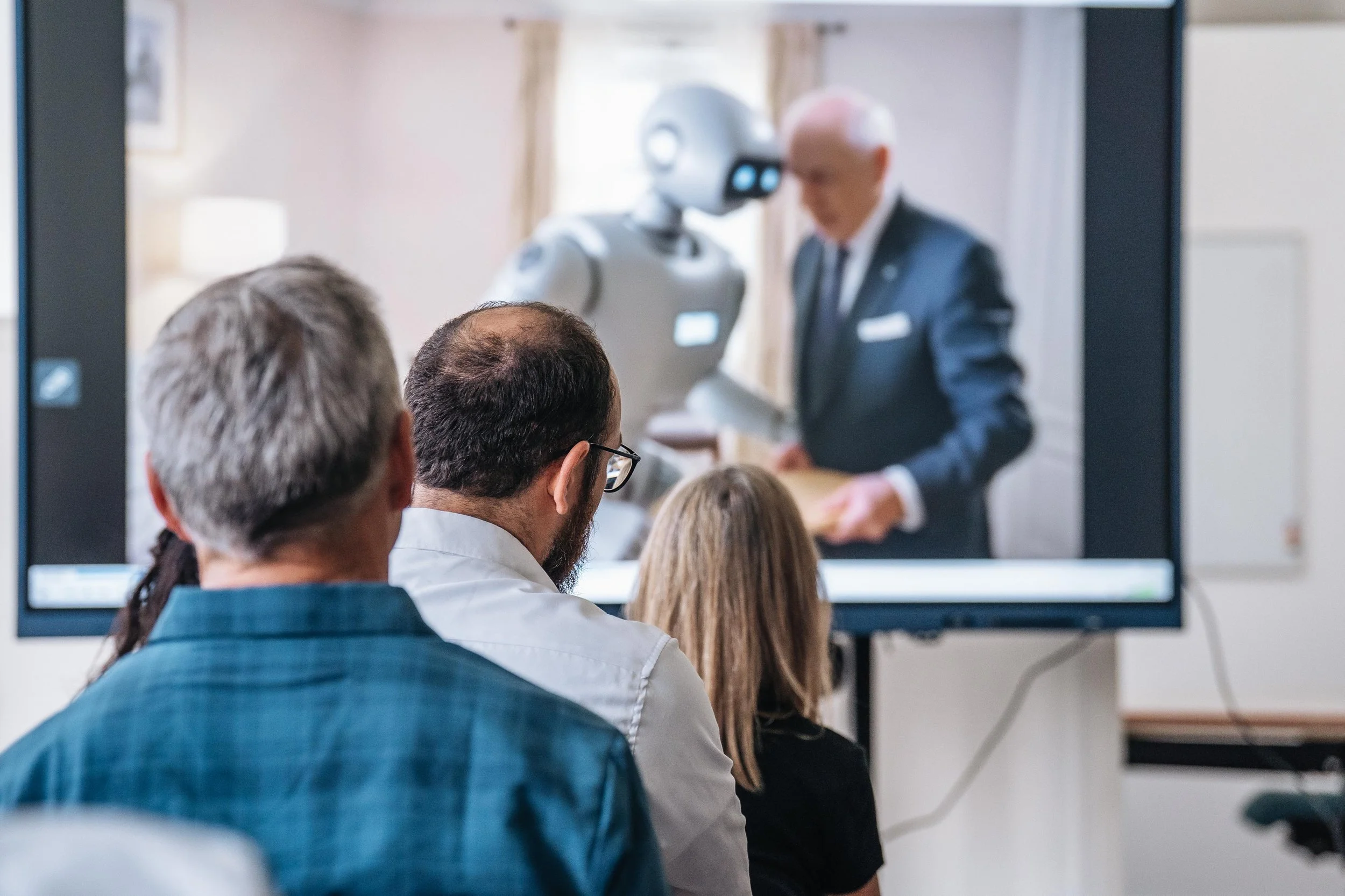
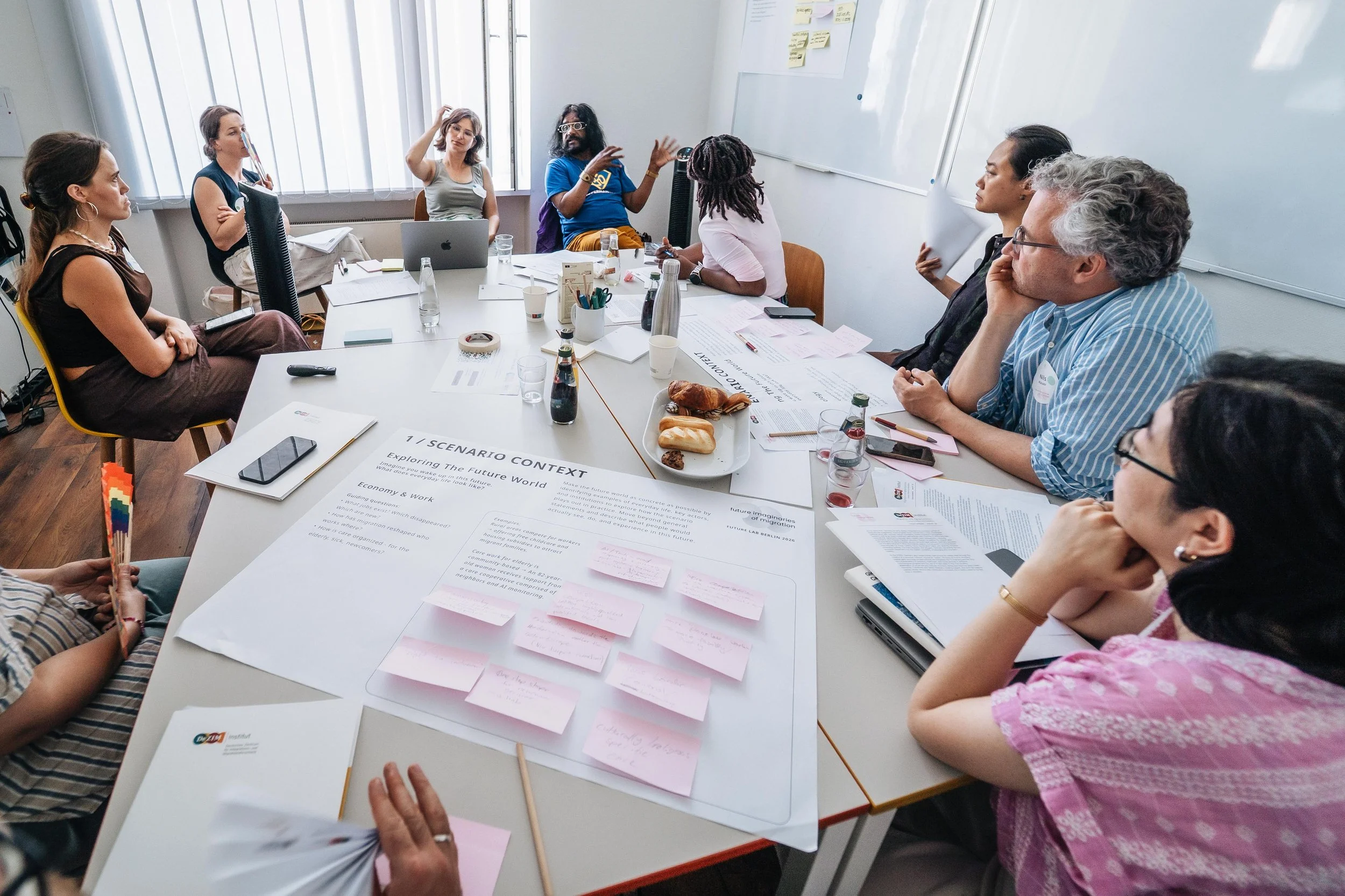
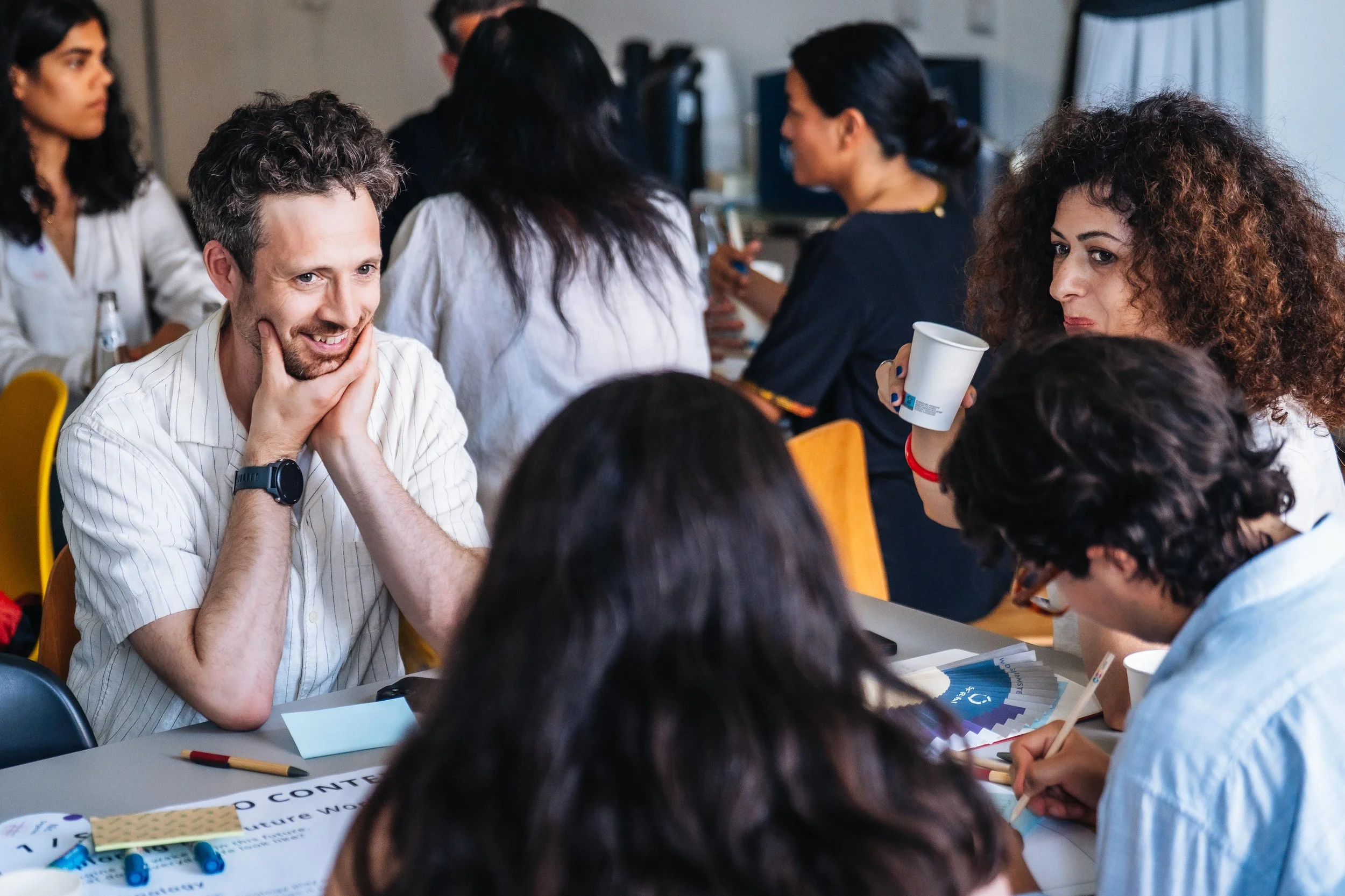
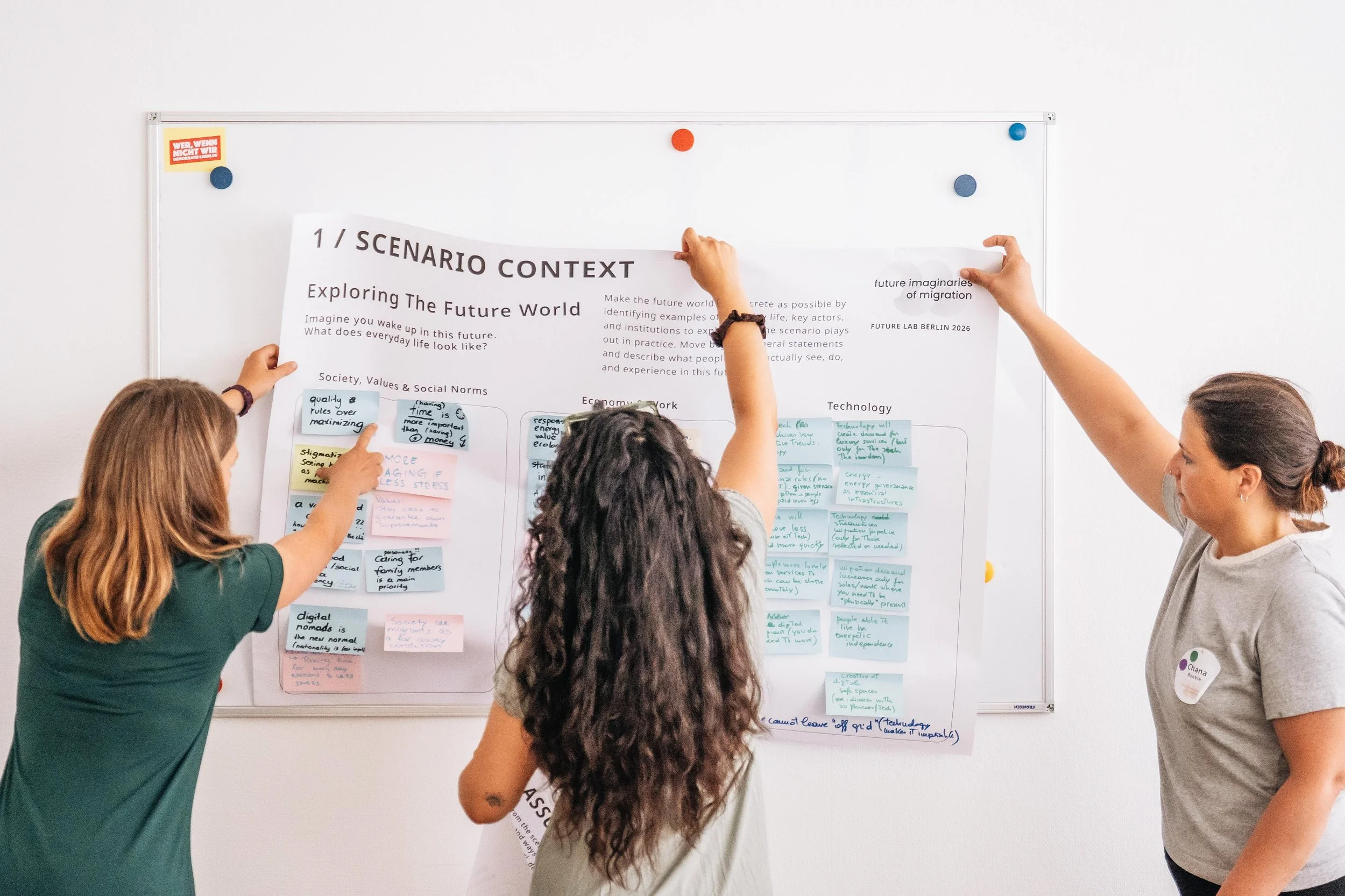
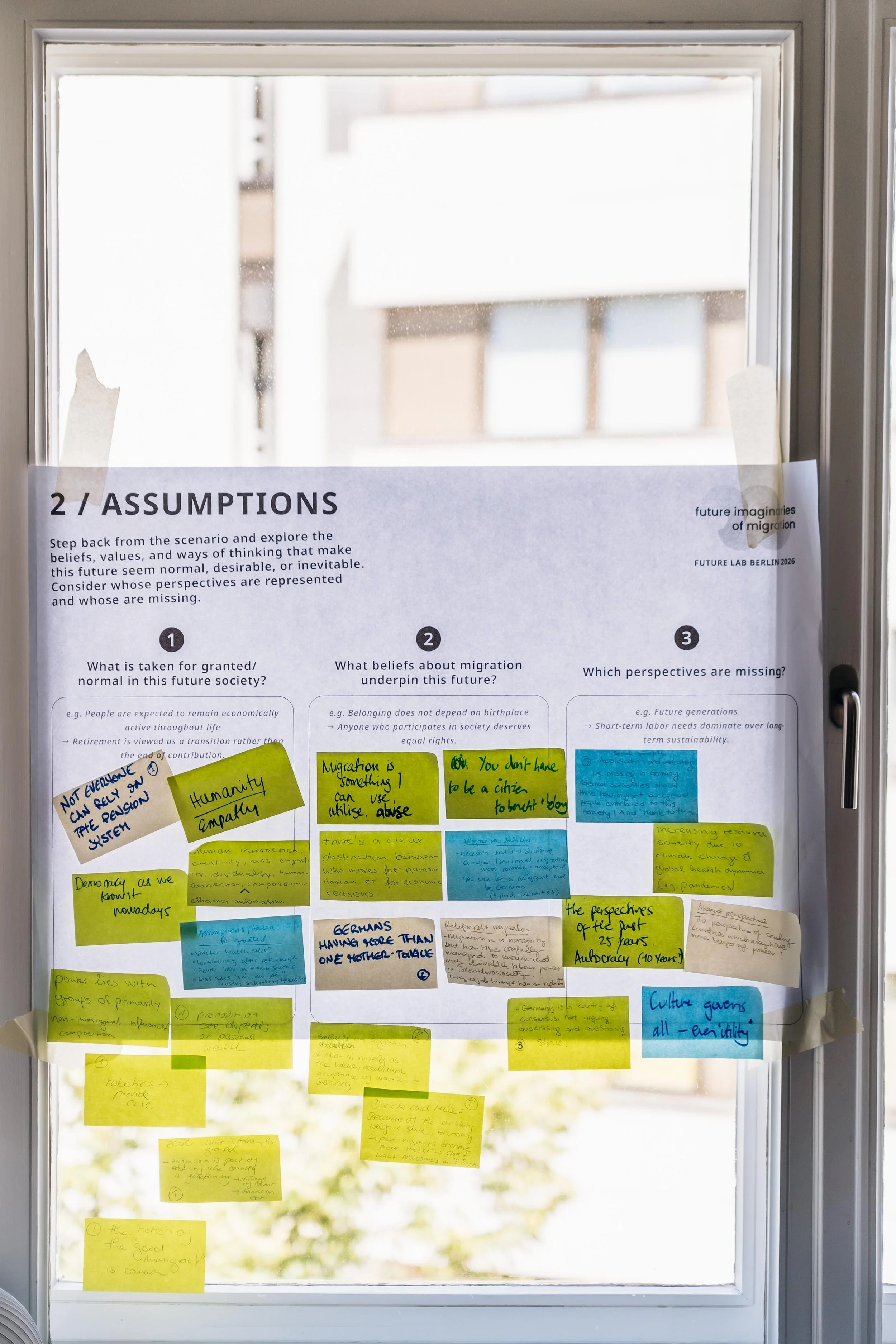
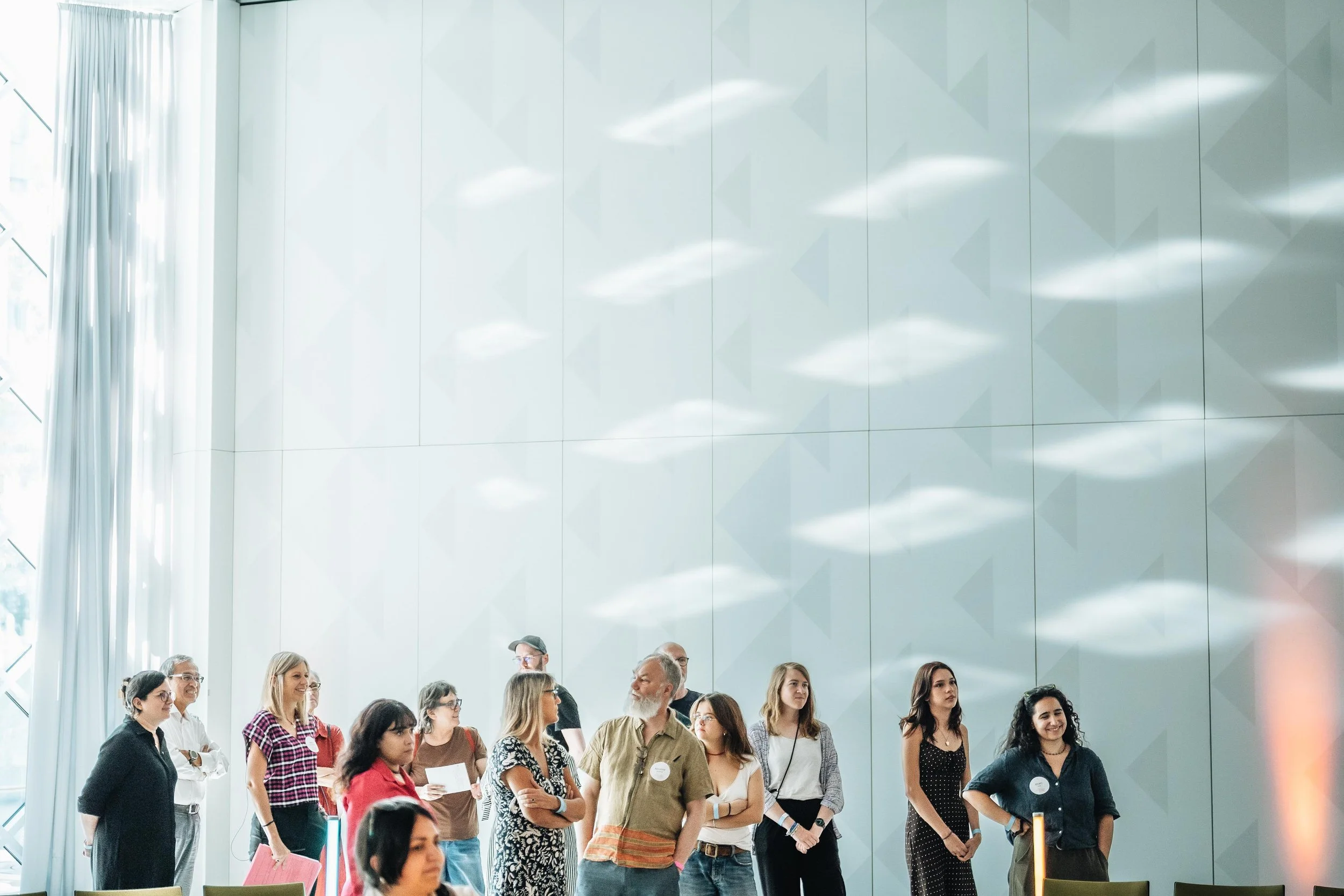
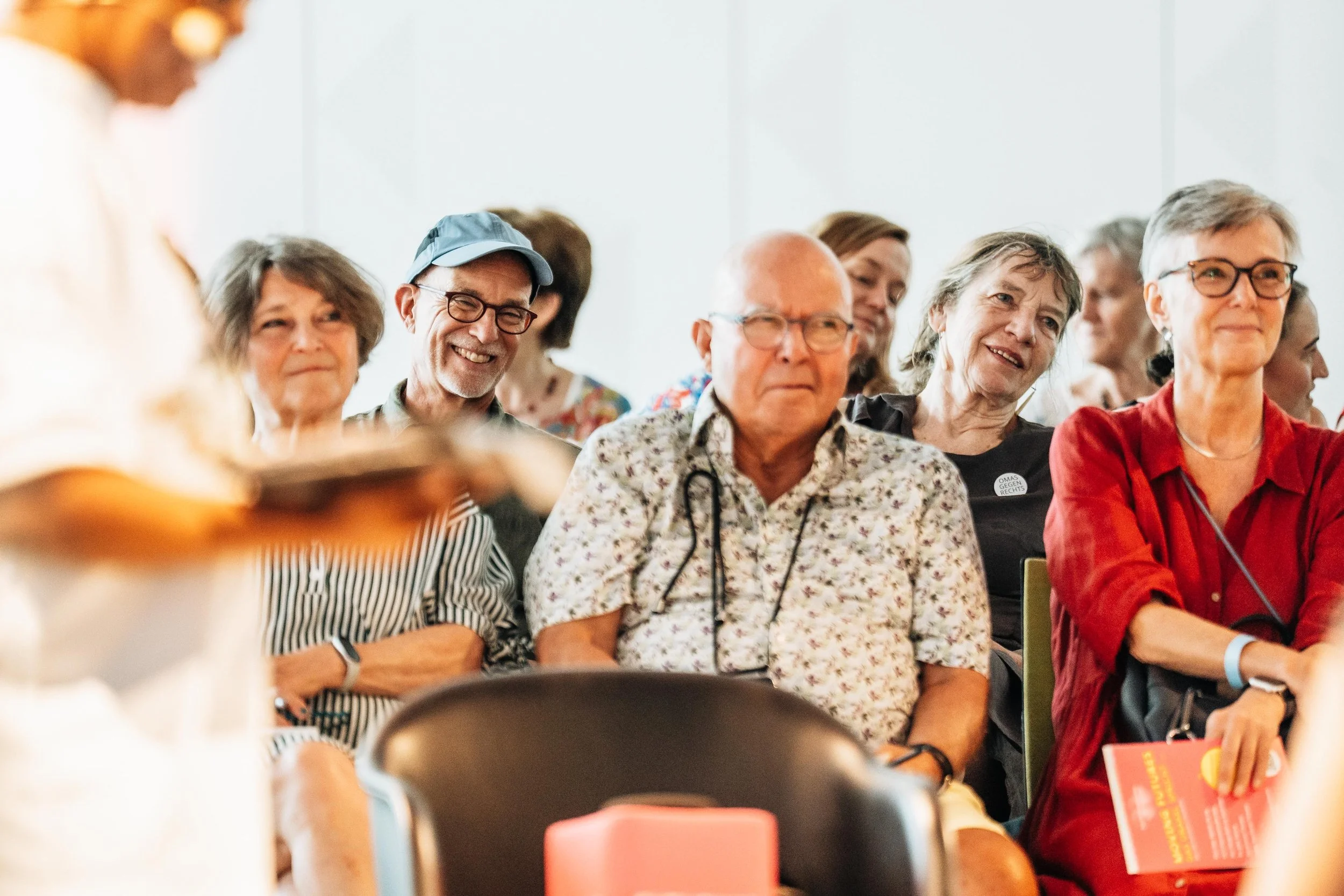
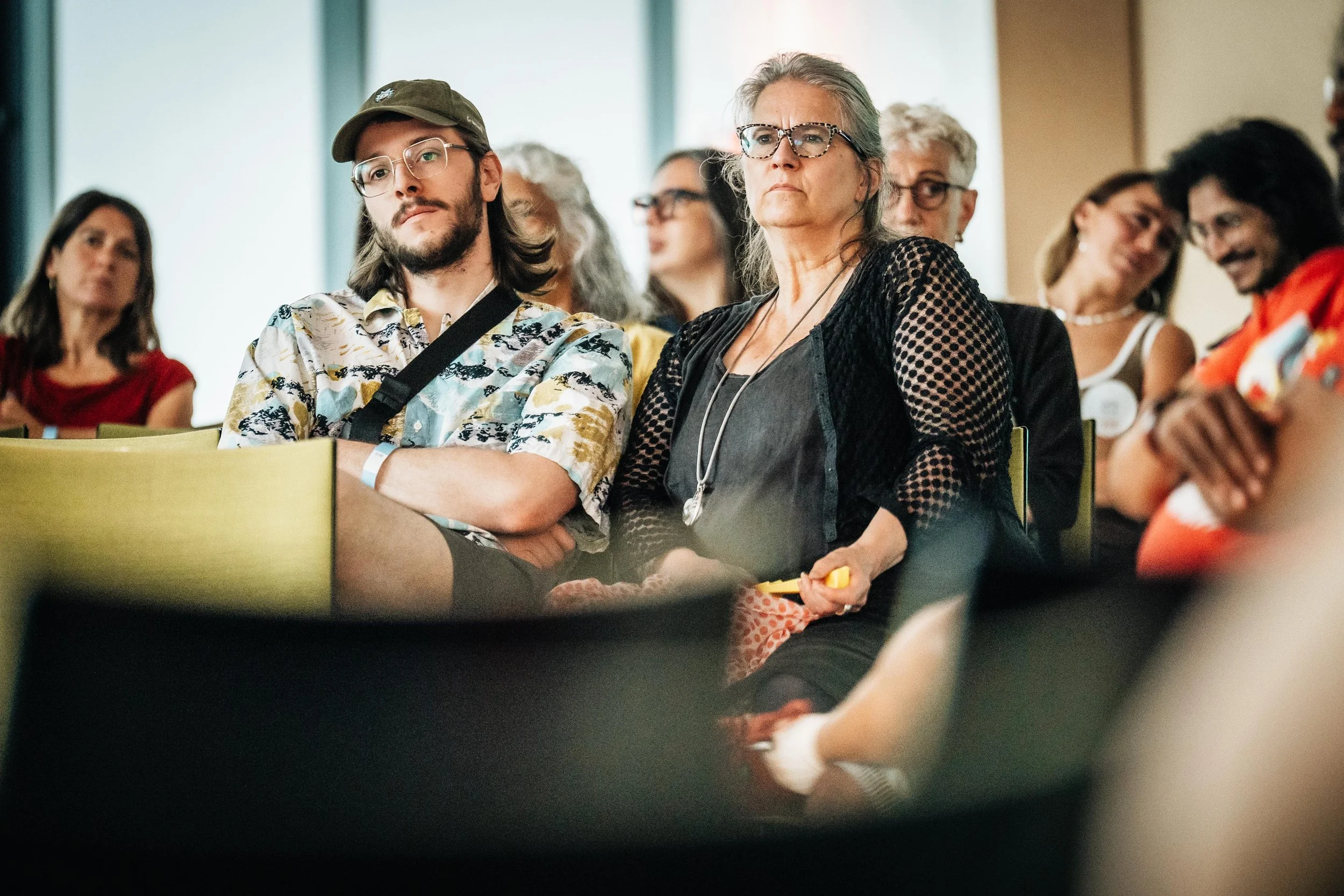
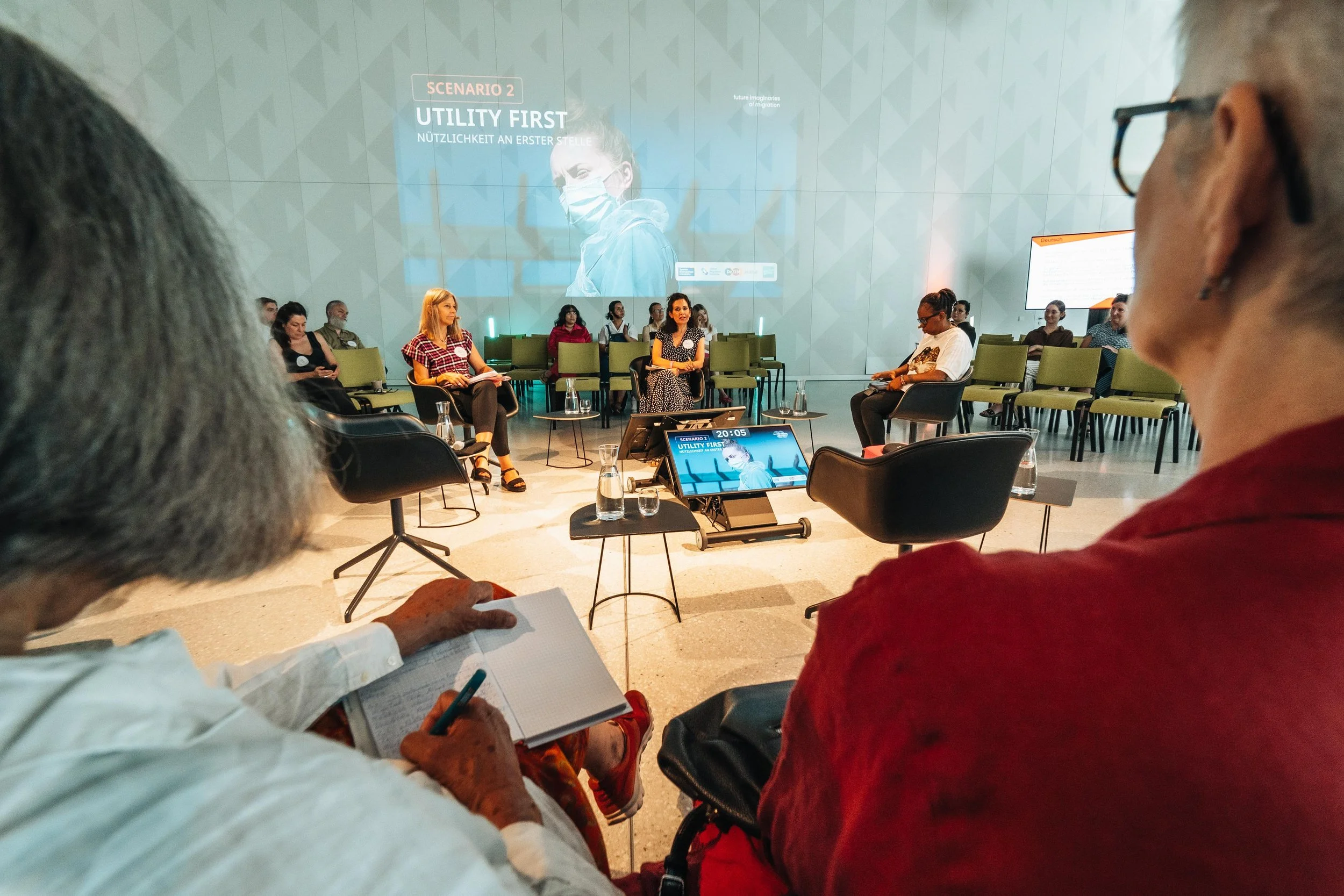
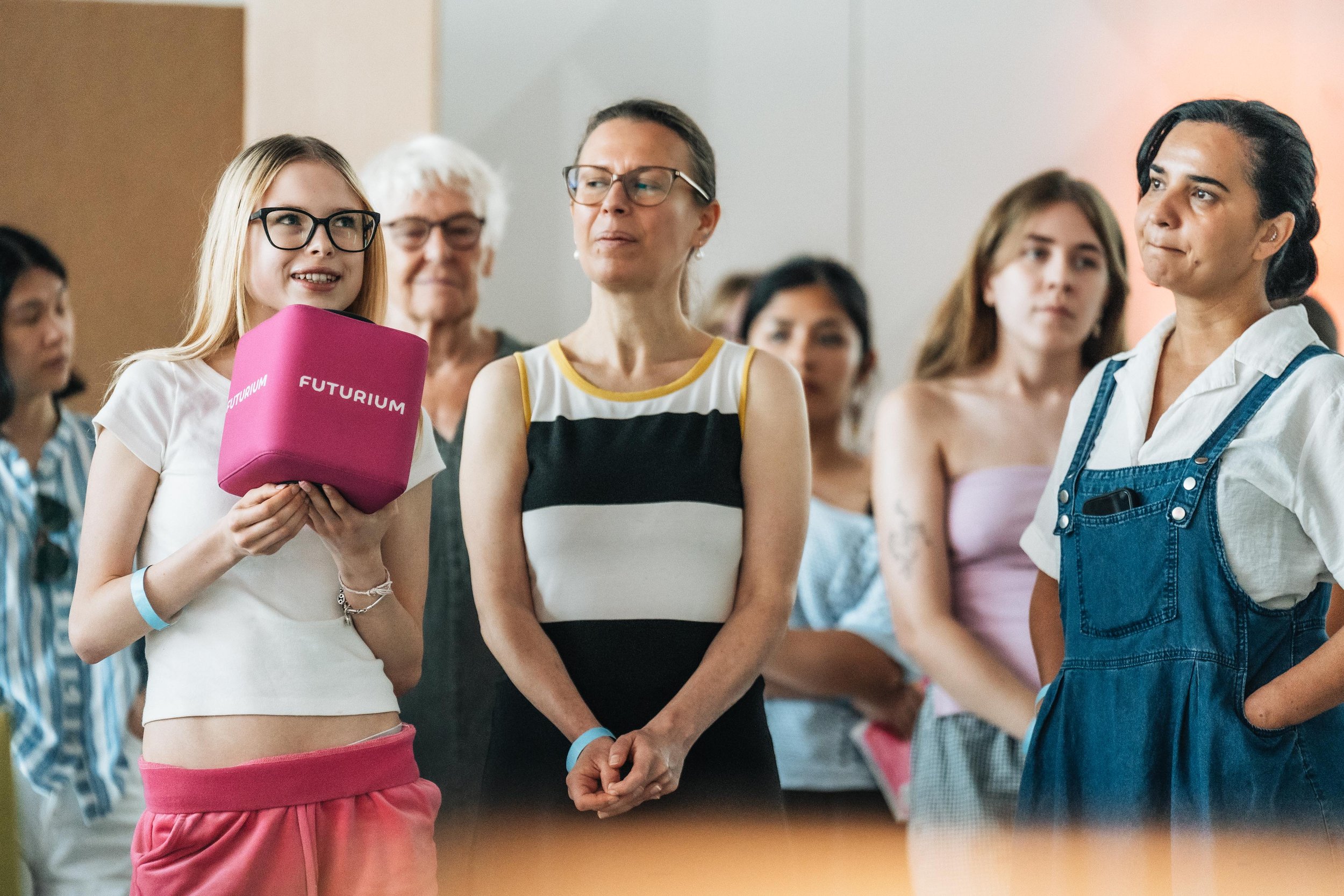
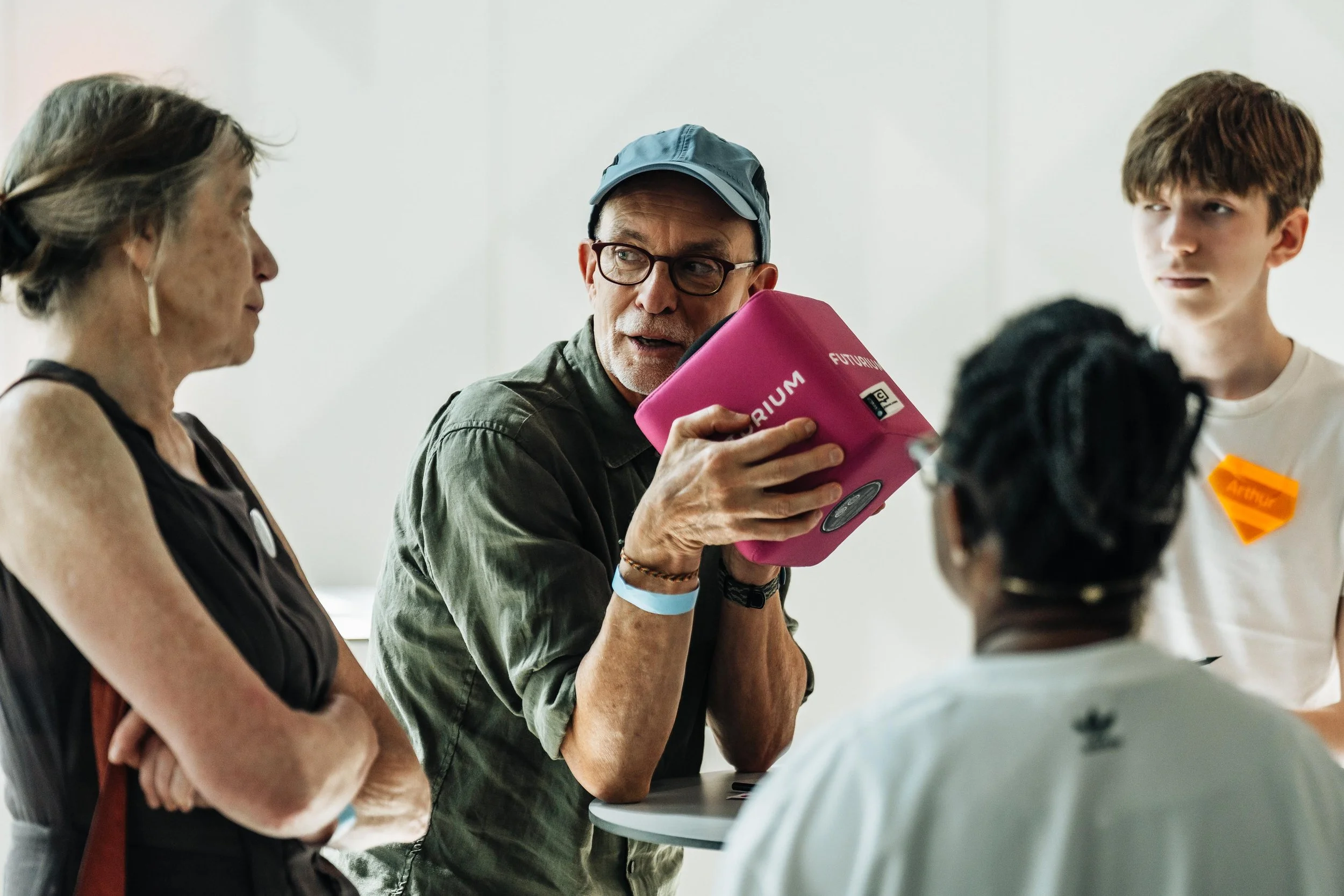
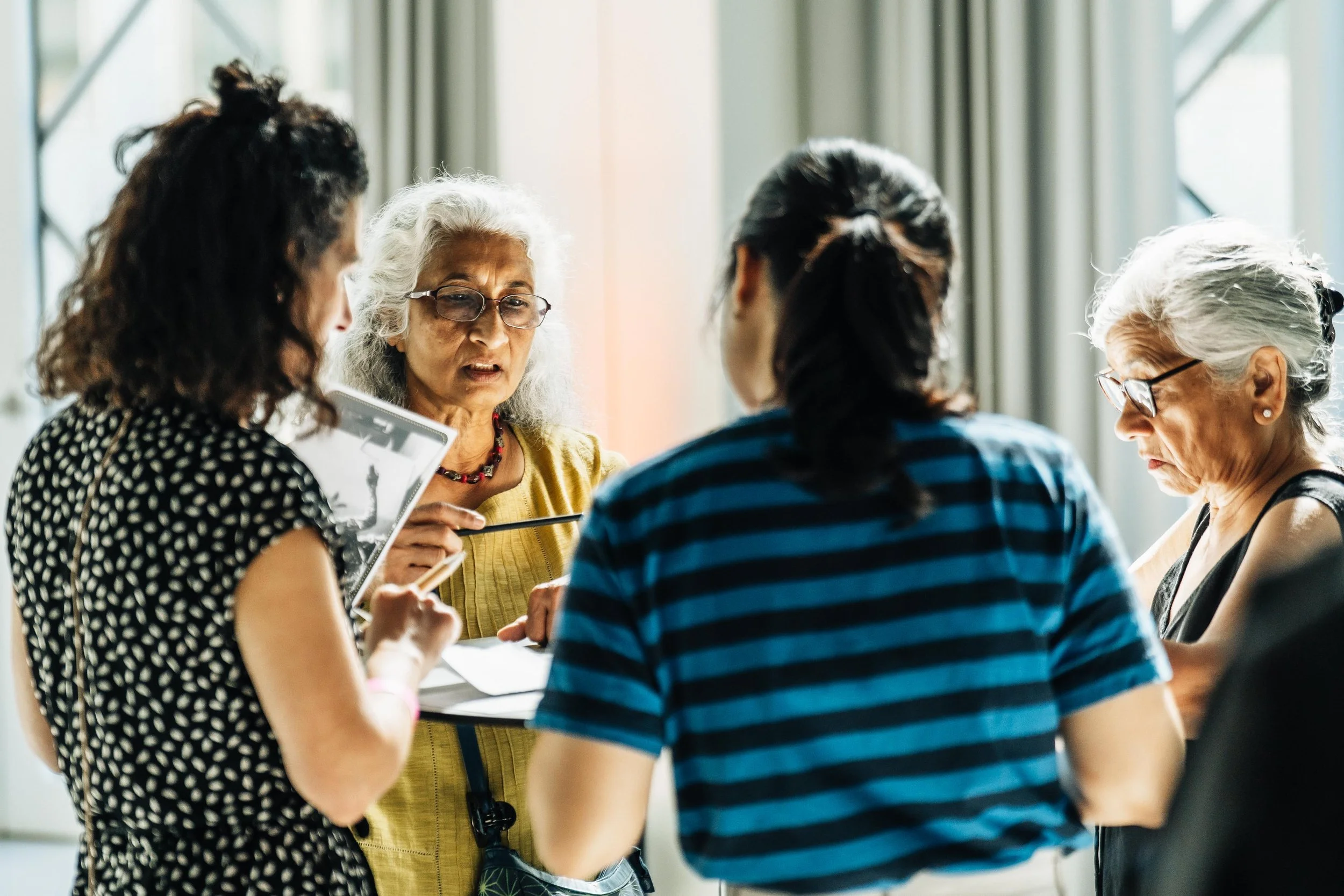
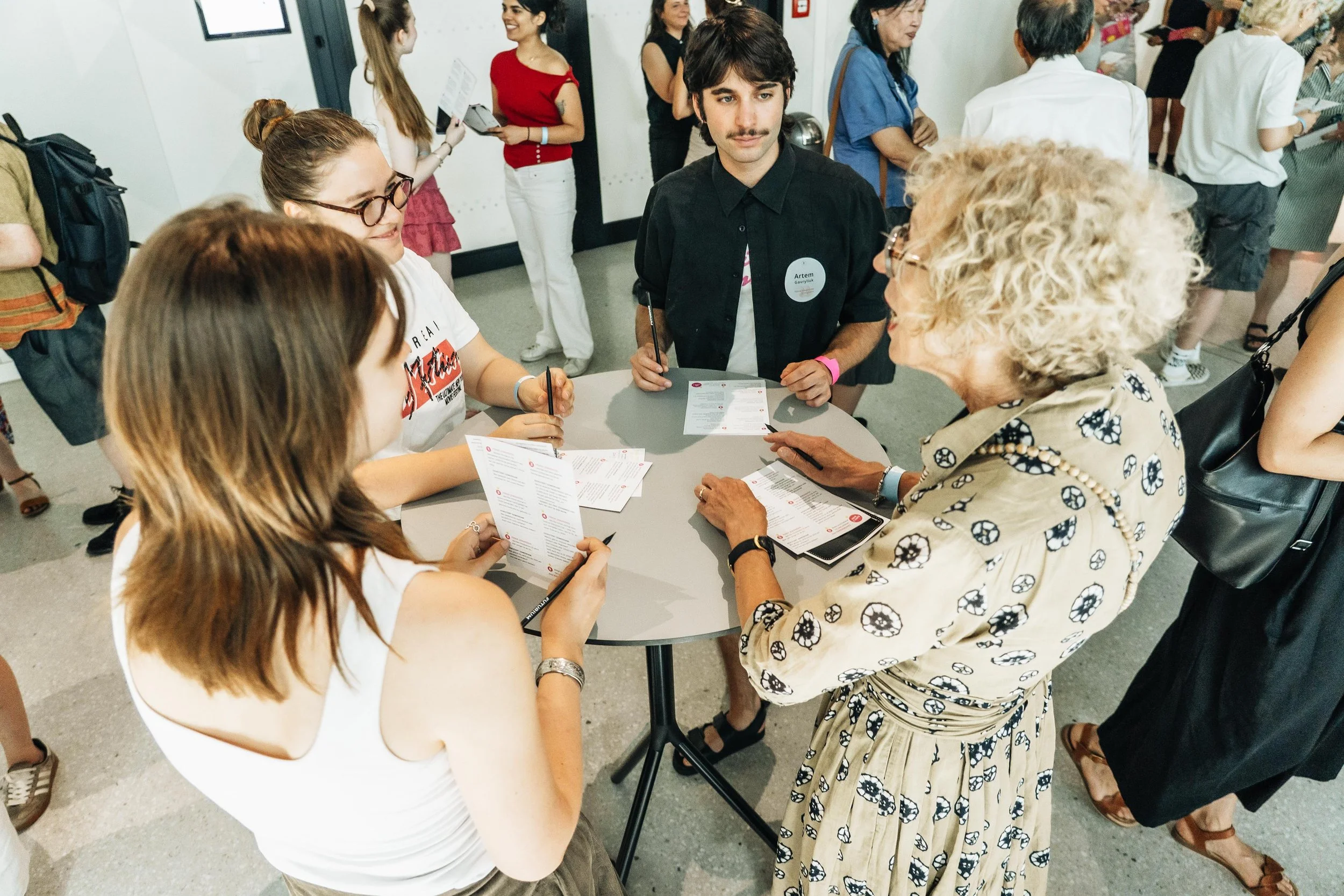
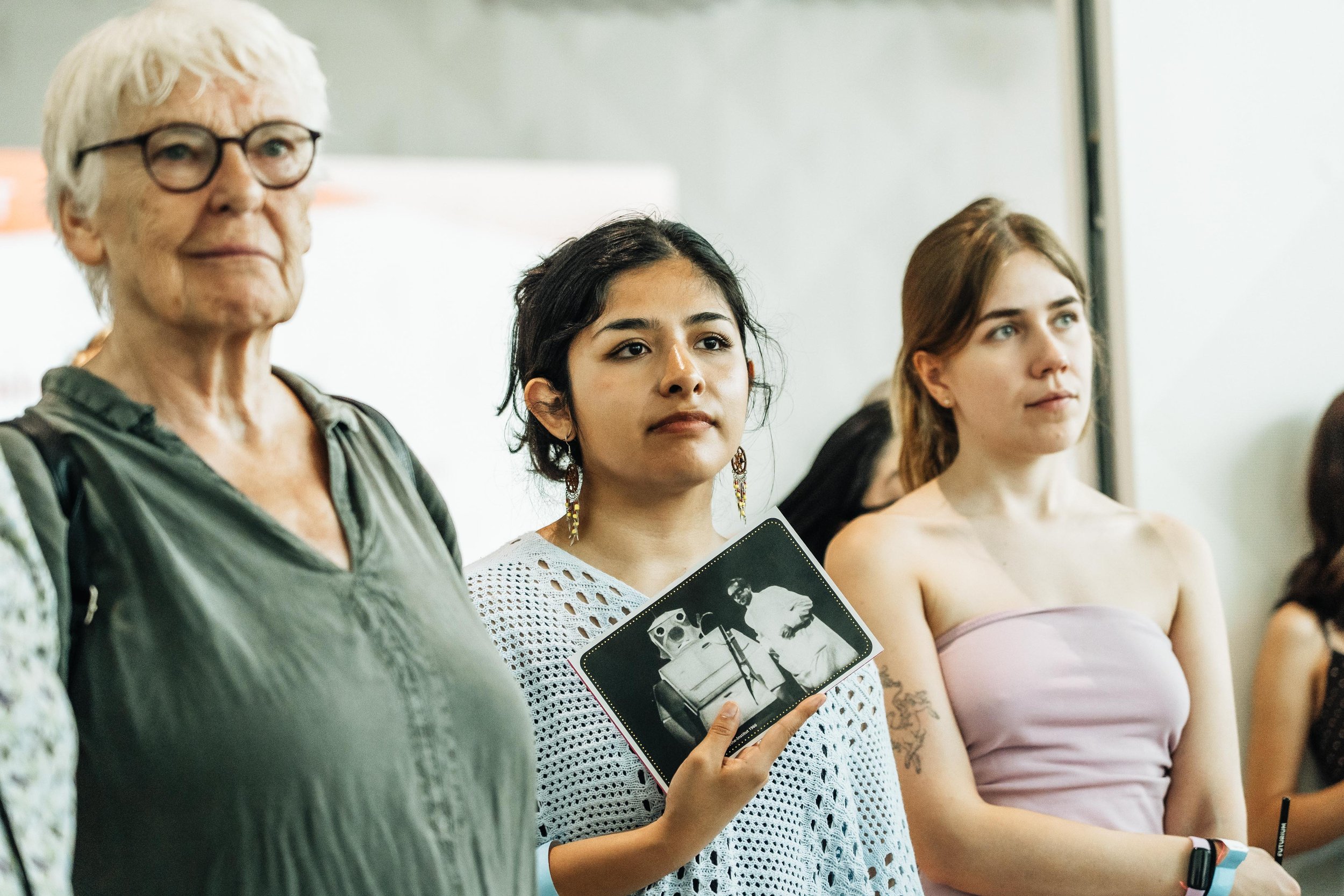
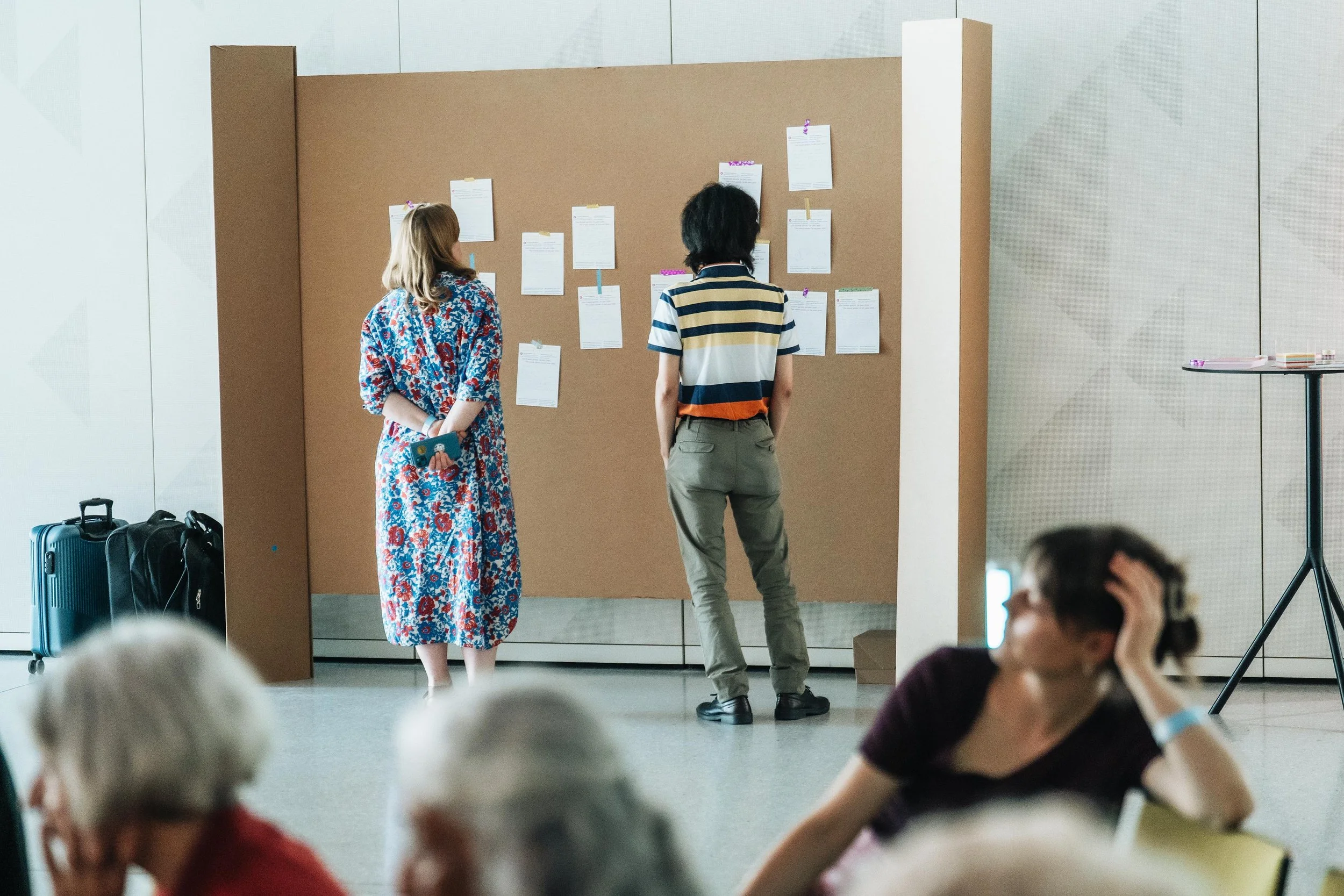
A Look Behind the Scenes: Our First Future Lab in Berlin
Photographer: Niklas Hlawatsch / Fuchs Teufel Bild
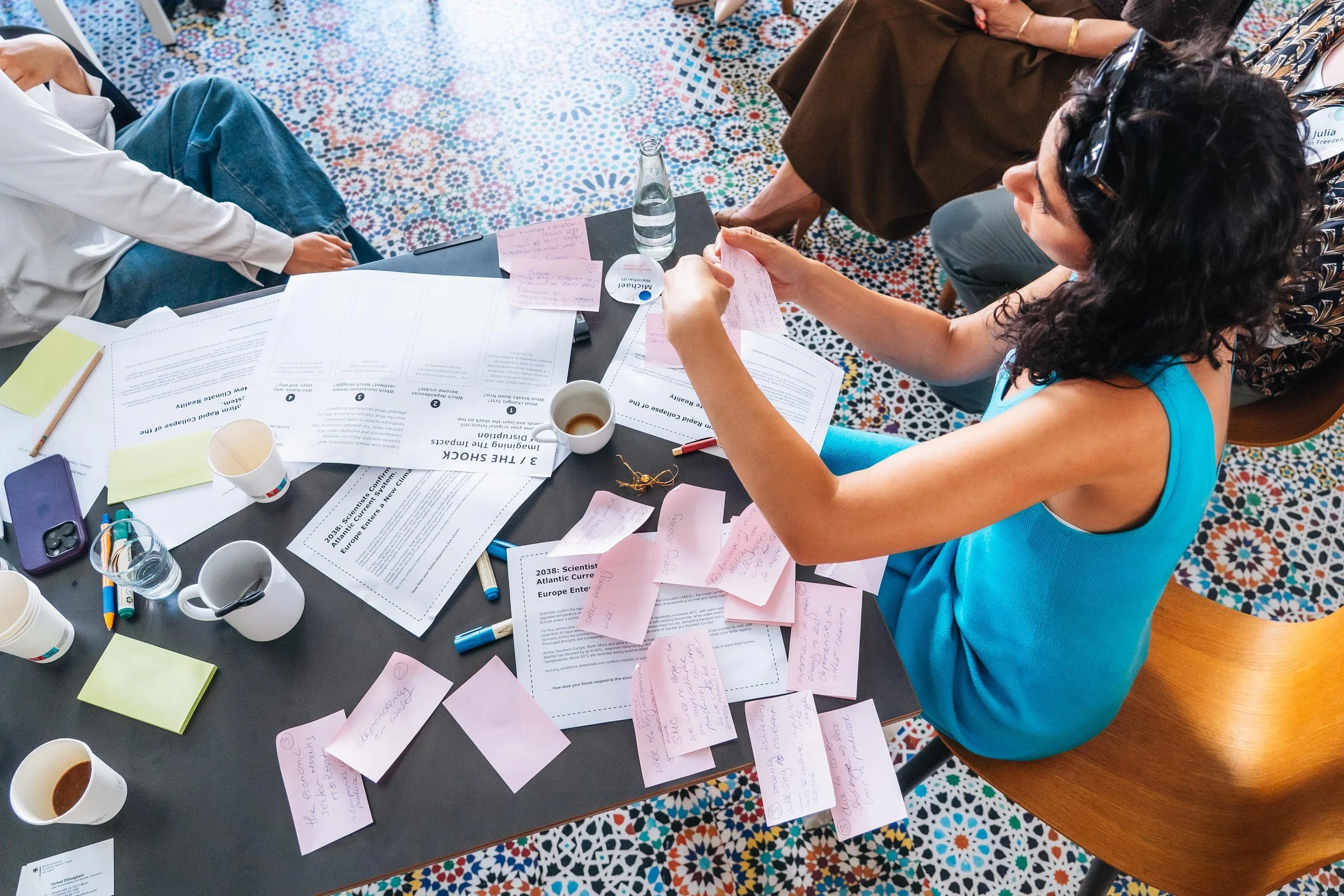
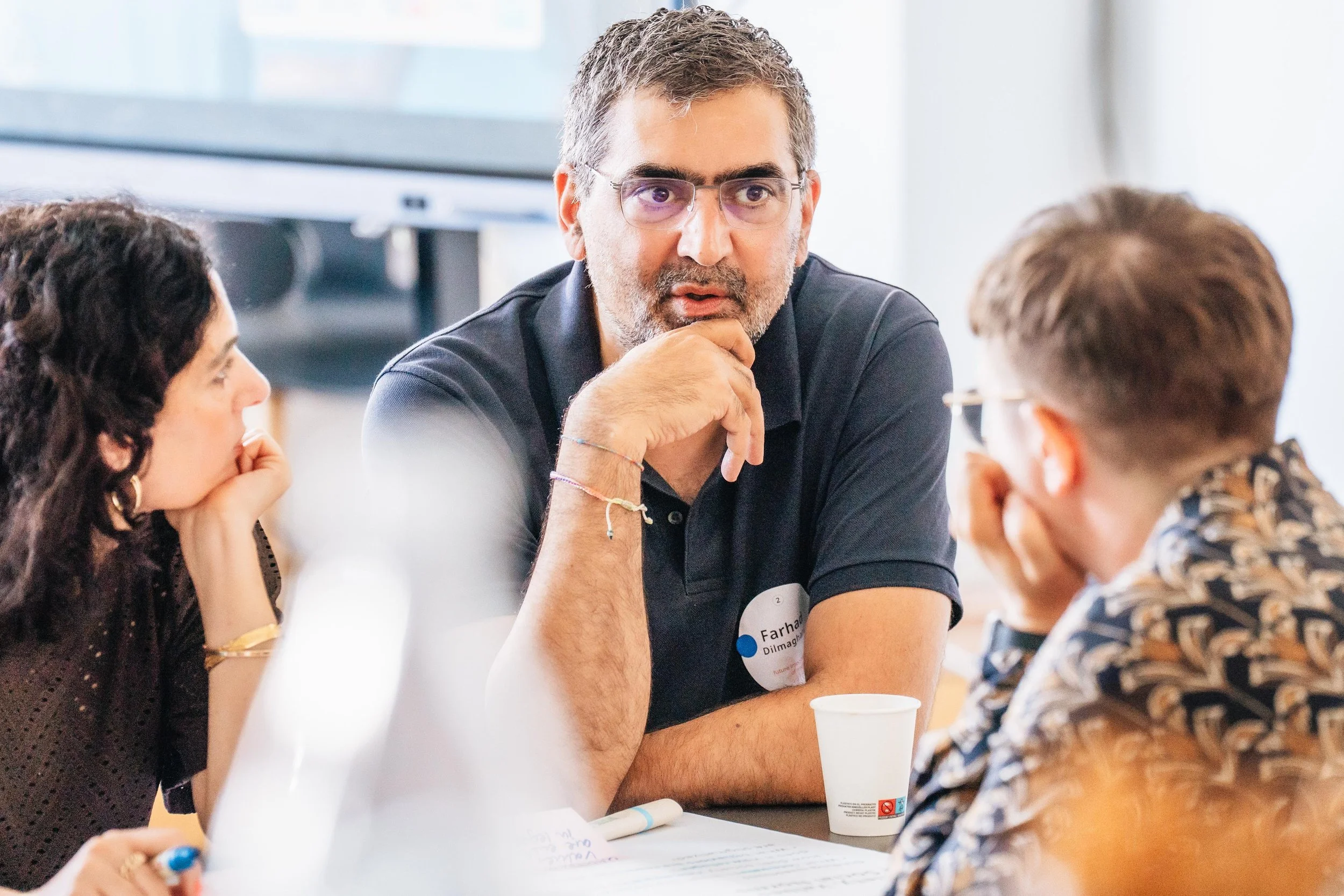
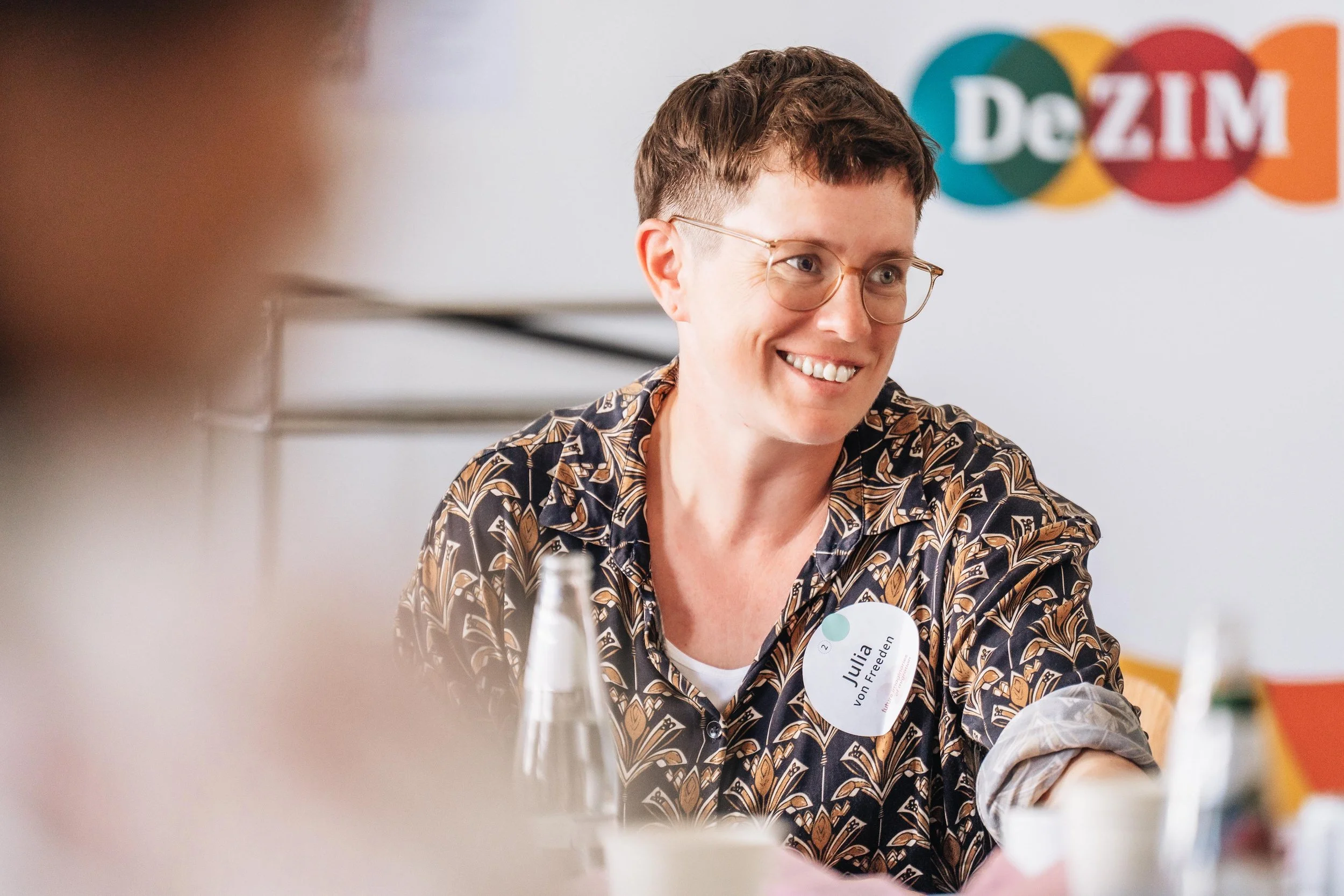
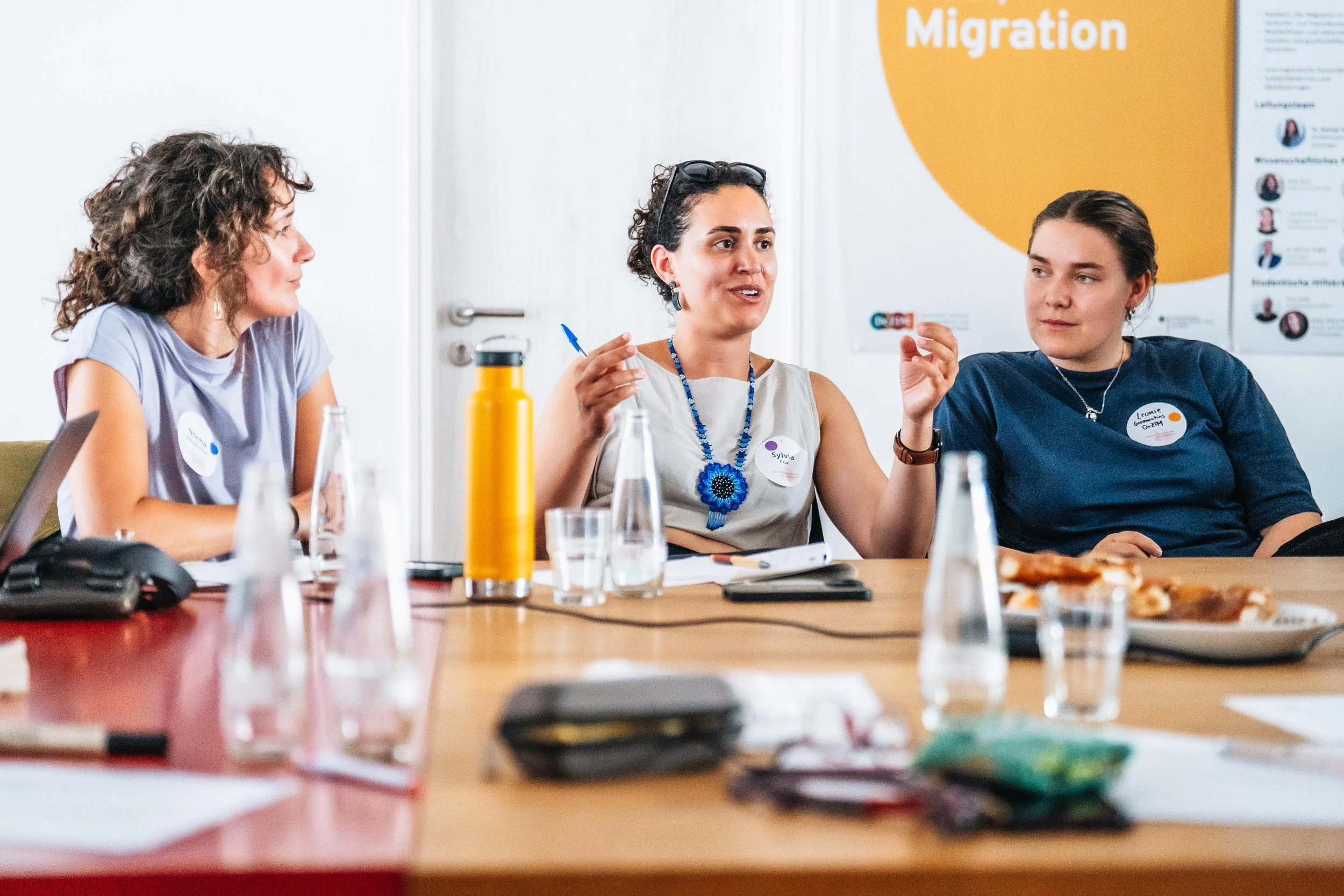
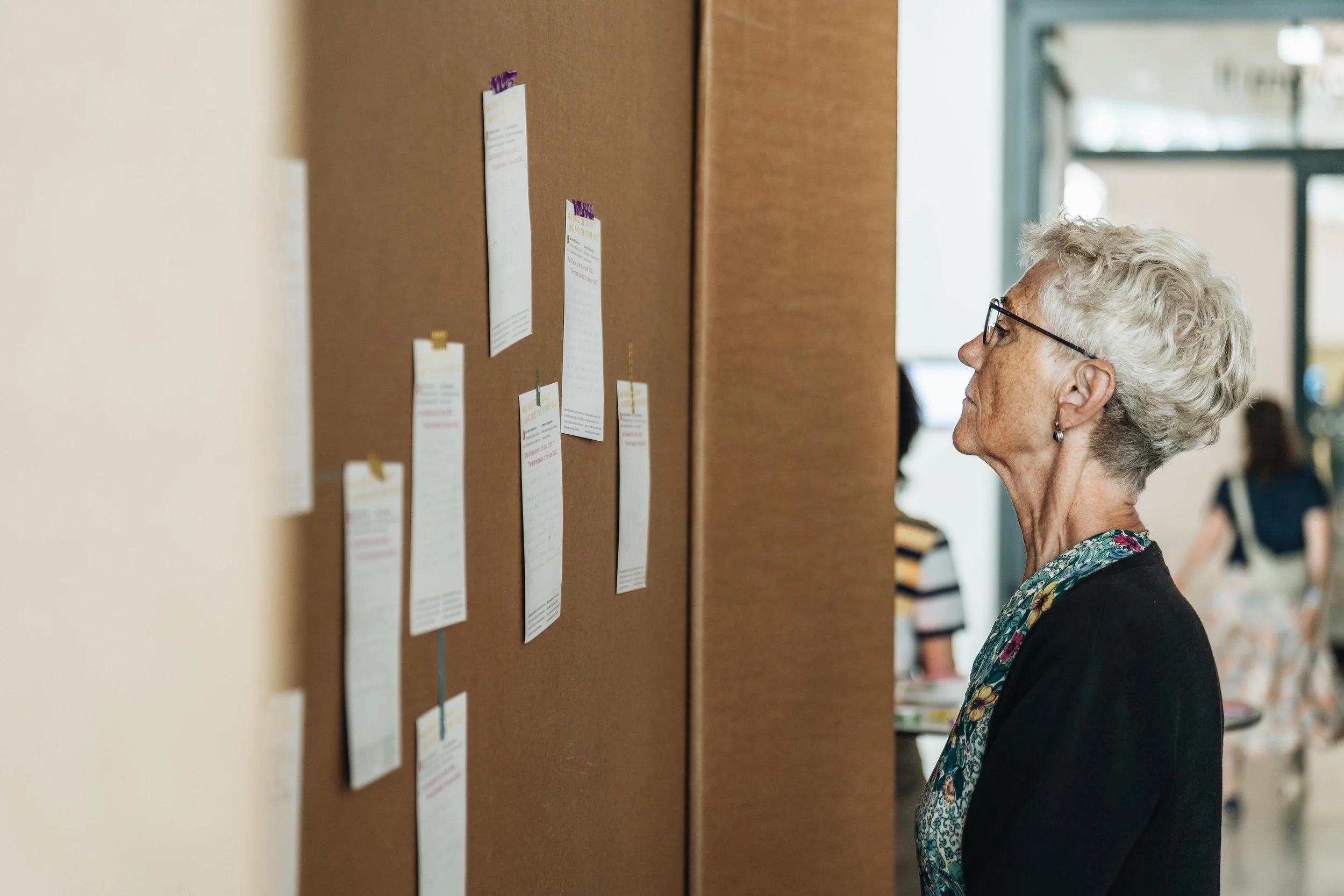
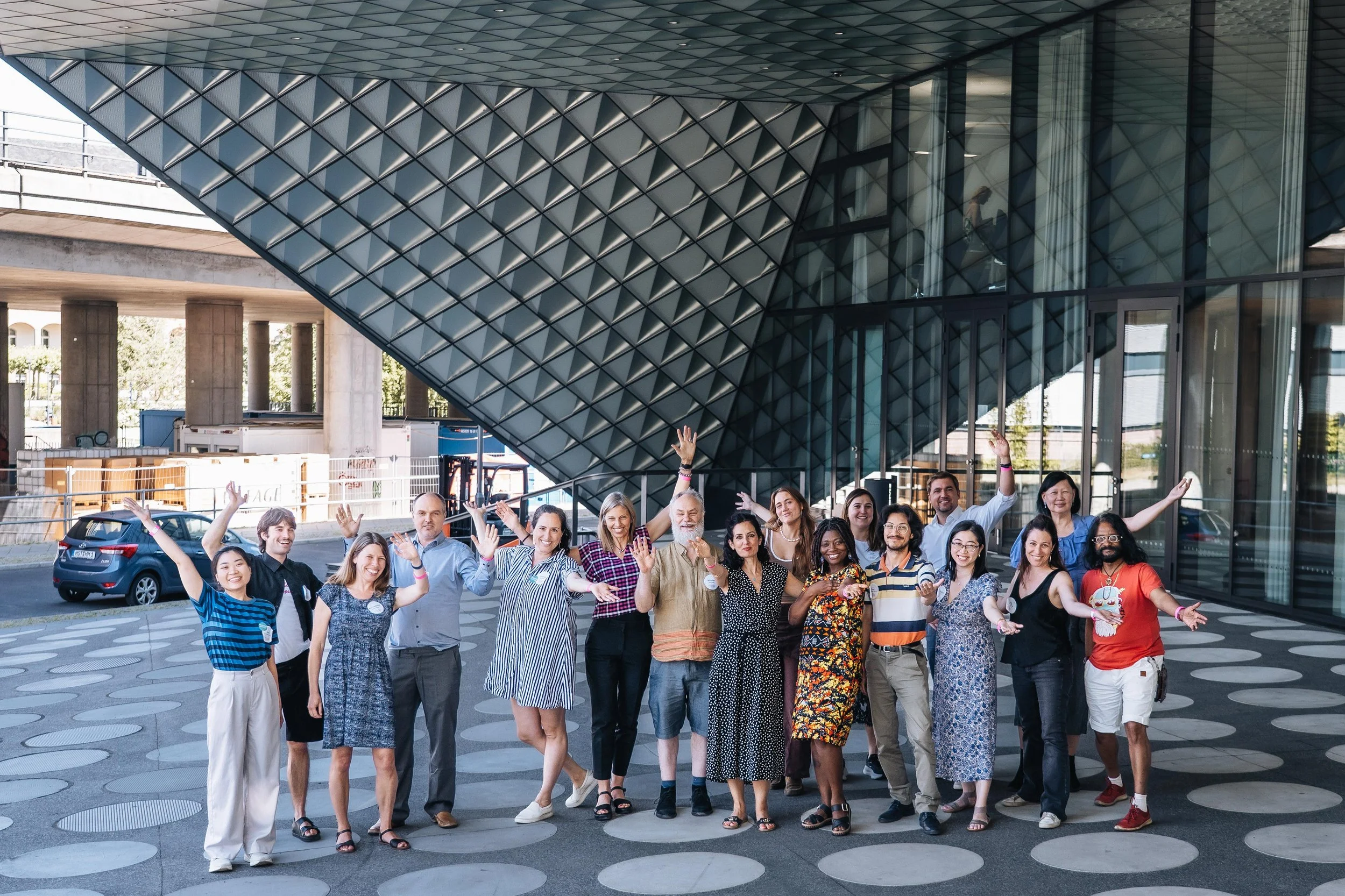
Researchers
Anna Triandafyllidou
“Technologies are changing the way we move, the way we work, the way migration is processed - in order to decrease inequality, humans will need to find new solutions.”
Toronto Metropolitan University,
Global Migration Institute
Sociology, Political Science
-
currently makes me feel hopeful but also concerned because, in terms of human mobility and migration, it means that the world is growing increasingly unbalanced and unequal. Some world regions like Africa or Asia have more young people and some other world regions have more capital and more technology. This imbalance and inequality is increasing rather than decreasing. At the same time, technologies are changing the way we move, the way we work, the way migration is processed (governance), the way in which migrants make their plans and even their desires and needs (through relative deprivation). In short, my concern is that we are heading towards a more polarising world. But I am someone optimistic so I feel that humans will find solutions to these tensions and we will all end up in a better place.
Naika Foroutan
“Migrants are often incorporated as labor but excluded from family reunification or citizenship. By 2050, more open borders, transnational labor standards, and equal rights could be the norm rather than a privilege reserved for the few.”
Deutsches Zentrum für Integrations- und Migrationsforschung,
Humboldt-Universität zu Berlin
Political Science, Sociology, Social Studies
-
currently makes me feel concerned, yet analytically attentive. Empirical data suggest that migration will increase due to conflict, inequality, and climate change. The central challenges lie in unsafe mobility pathways—where people continue to die while attempting to migrate—and in persistent exclusionary attitudes and unequal participation structures in destination societies. At the same time, survey data indicate gradual normative shifts toward greater acceptance in postmigrant contexts. In aging societies of the Global North, we observe emerging competition for migrants. I am concerned that this will reinforce a utilitarian logic, positioning immigrants primarily as labor, with the risk of institutionalizing second-class membership.
Mary Setrana
“Across Africa and beyond, drawing on stronger collaboration and research-informed evidence we can build migration systems that are just, inclusive and responsive to the realities of our time.”
University of Ghana,
Centre for Migration Studies
Sociology
-
I'm hopeful, but with caution. Across Africa, the Global South, and beyond, there is a real opportunity to shape migration through inclusive policies and to shift negative narratives toward more balanced, human-centered perspectives. Realising this will require targeted policy interventions and sustained institutional commitment.
We must also draw on co-created, research-informed evidence, along with stronger collaboration and innovation, to ensure that mobility becomes a driver of sustainable development. In the same vein, efforts must be directed at reducing vulnerability and safeguarding the rights and dignity of all migrants. That way, we are better positioned to build migration systems that are just, inclusive and responsive to the realities of our time.
Brenda Yeoh
“The gap between the mobile and the immobile is rapidly widening – so thinking about the future currently makes me more concerned than hopeful.”
University of Singapore,
Asia Research Institute
Geography, Social Science
-
currently makes me more concerned than hopeful because the gap between the mobile and the immobile is rapidly widening, and migration pathways and opportunity structures increasingly bifurcated to serve the privileged rather than the impoverished.
Artists
Nicolas Malevé
“My wish for the future? - That there is a future and that there is a society in 2050. None of these things, even at their most basic level, can be taken for granted.”
Medialab and School of Law, SciencesPo, Paris
Art, Aesthetics, Computational culture, Media
-
currently makes me feel anxious yet energized because, in terms of human mobility and migration, it means clearly the current alliance of capitalism and the war machine turns the disrespect of human life into a rule. And makes the issue of migration even more worrying. Yet, the very extreme character of the current conditions might provide the ground for more essential responses.
Cana Bilir-Meier
“In my experience, migration means many things, both negative and positive. However, we should never forget the strength of imagination of the impossible - so it becomes reality one day. ”
Artist, Filmmaker
-
makes me feel apprehensive because in terms of human mobility and migration, it means borders are becoming less porous, and even those who manage to cross them face draconian restrictions on their freedoms. They are pressured to integrate, yet told that they can never be integrated. They face the hostility of increasingly right-wing hosts.
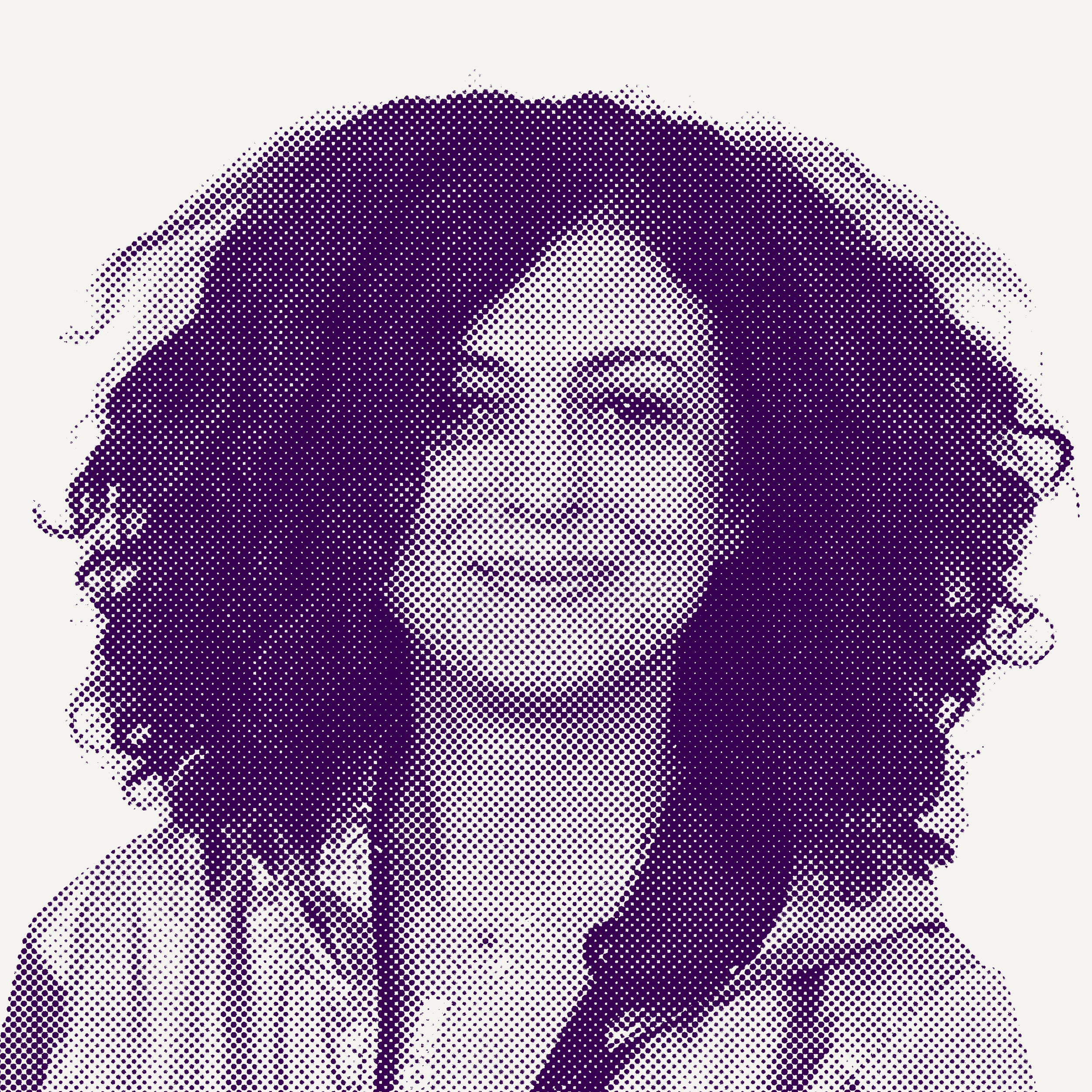
Pınar Öğrenci
“I hope for a future in which migration is not used to divide social groups or fuel nationalist and right-wing ideologies, but is embraced as an enriching and shared experience of living together.”
Hochschule für Bildende Künste Braunschweig
Artist, Filmmaker, Writer
-
In the new world order of today, thinking about the future fills me with anxiety. I believe that very soon we may all become displaced, forced to move from one place to another. Mobility, migration, homelessness, and estrangement will no longer be concerns only of the Global South, but will also shape the realities of those in the North.