

PROCESS
How can we better shape human mobility as an opportunity for societal progress in the future?
Let’s Imagine Futures of Migration!
BACKGROUND
Why we are initiating this interdisciplinary project
Human mobility is entering a period of profound transformation. Climate change, demographic shifts, digitalization, and geopolitical instability are reshaping how and why people move. At the same time, emerging technologies, from AI‑driven forecasting tools to immersive virtual environments, are altering how people imagine and experience mobility, and how migration can be governed. Yet research and policy on migration issues remain largely reactive, focused on short‑term pressures rather than long‑range, justice‑oriented futures.
We believe that the futures of migration are inextricably linked to the future(s) of work, education, housing, and care, as well as to a shared understanding of social values regarding issues of solidarity and belonging.
This is why the debate needs to go beyond disciplinary silos or conventional forecasting on human mobility. Instead, it requires collaborative, imaginative, and anticipatory approaches that bring together diverse forms of expertise, including community knowledge, artistic practice, and computational modelling, to explore how mobility may evolve and how societies can prepare for equitable futures.
Our key questions are:
What are possible and plausible futures for human migration and mobility?
Will technology completely disrupt the way we ‘move’ and even the way we think about mobility?
How can we best prepare for a future in which migration is a crucial driver of societal development?
THE PROJECT IDEA
COMBINING EXPERTISE FROM MIGRATION RESEARCH, ART, AND FUTURE STUDIES
We will create a space where multiple futures can be imagined, debated, and visually expressed. This project combines empirical research on migration with speculative and creative methods. Its goal is to improve how we think about social development and governance and to encourage more inclusive and anticipatory approaches to human movement.
Based on possible scenarios for futures of migration and cross-border human mobility, we ask: What is desirable, and for whom? What assumptions underpin our visions of the future? What unforeseen events could completely call into question current norms and practices regarding how migration is currently managed and enabled? And what perspectives are still missing from these visions of the future?
To advance our understanding of migration and its practical implications in global context, this project is launching an interdisciplinary think tank that brings together experts from migration research, future studies, art, technology, policy, and civil society across four continents.
INVITED PARTICIPANTS
PARTICIPANTS WITH DIVERSE PERSPECTIVES
AND EXPERTISE IN EXCHANGE
The project invites a deliberately diverse group of participants to discuss, imagine and create together: migration researchers, climate scientists, demographers, urban planners, artists, technologists, civil society leaders, youth advocates, and policymakers.
Each Future Lab convenes local and international actors whose lived experiences, disciplinary perspectives, and creative practices enrich the collective exploration of possible, plausible and desirable migration futures.
Artists selected and invited from the international network of participating Goethe-Institutes will accompany the discussion process and contribute visual responses.
The diversity of participants ensures that the project’s outputs reflect a wide range of voices, knowledge systems, and regional realities.
HUMAN AND ARTIFICIAL INTELLIGENCE
How human imagination and generative creation inspire one another
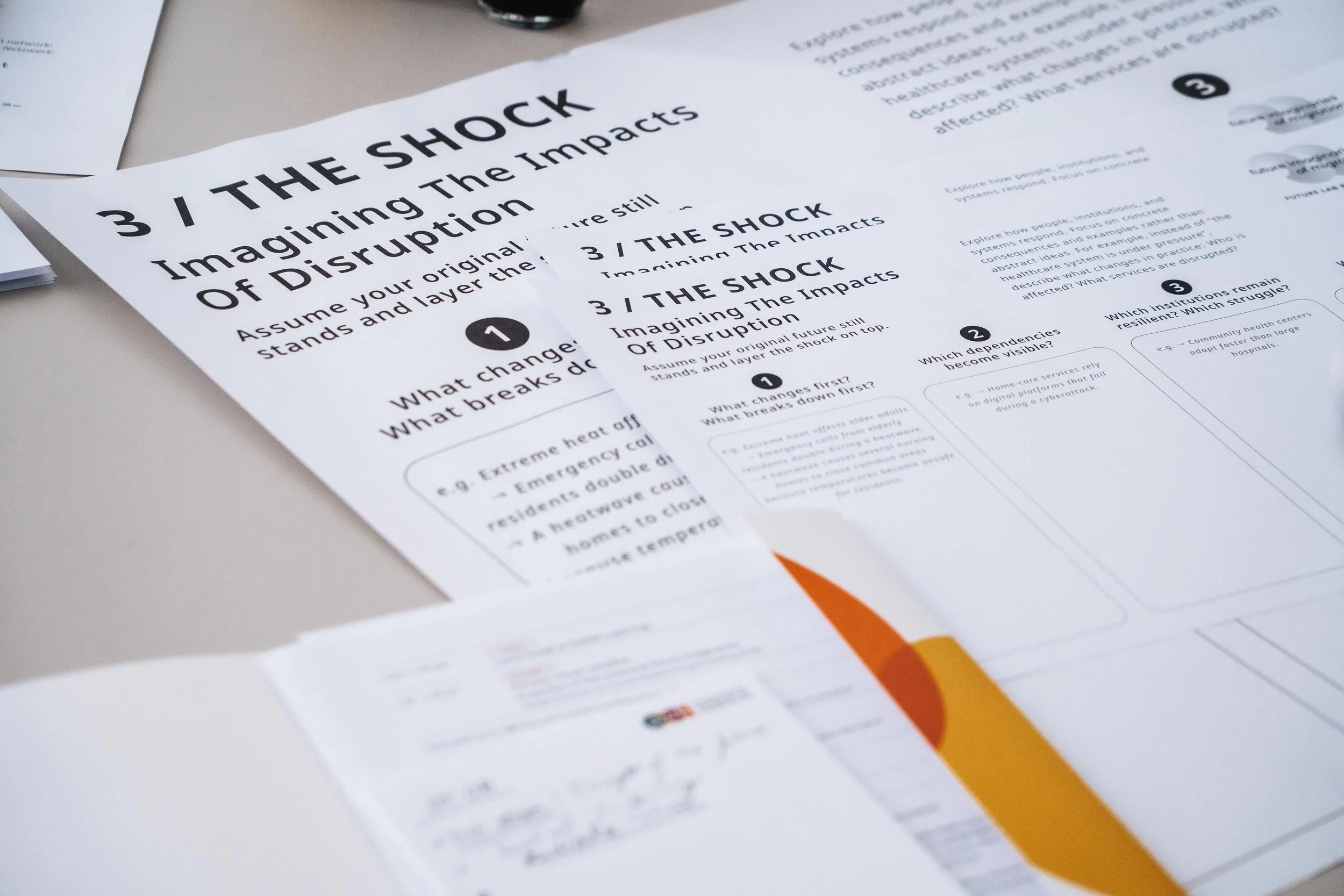
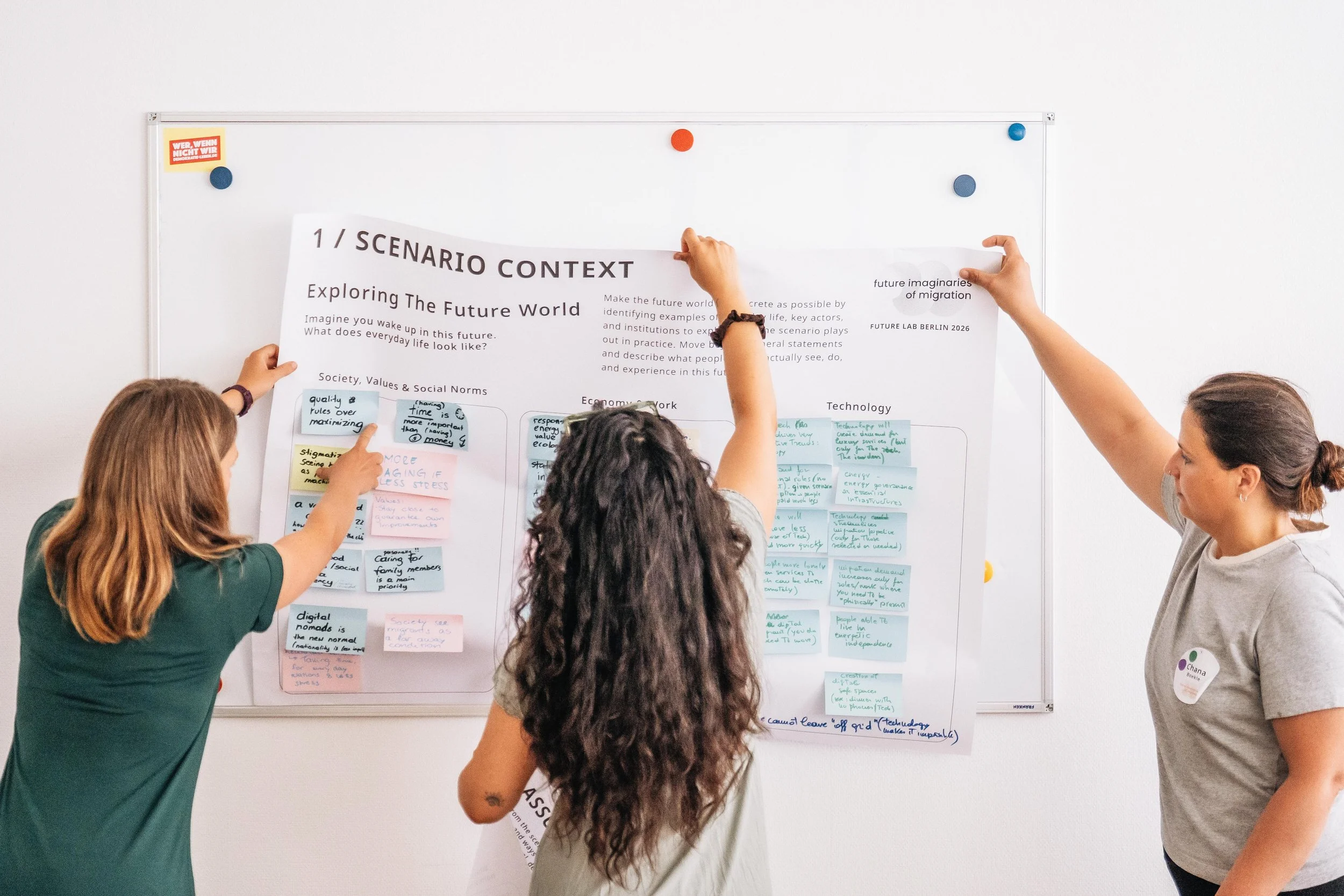
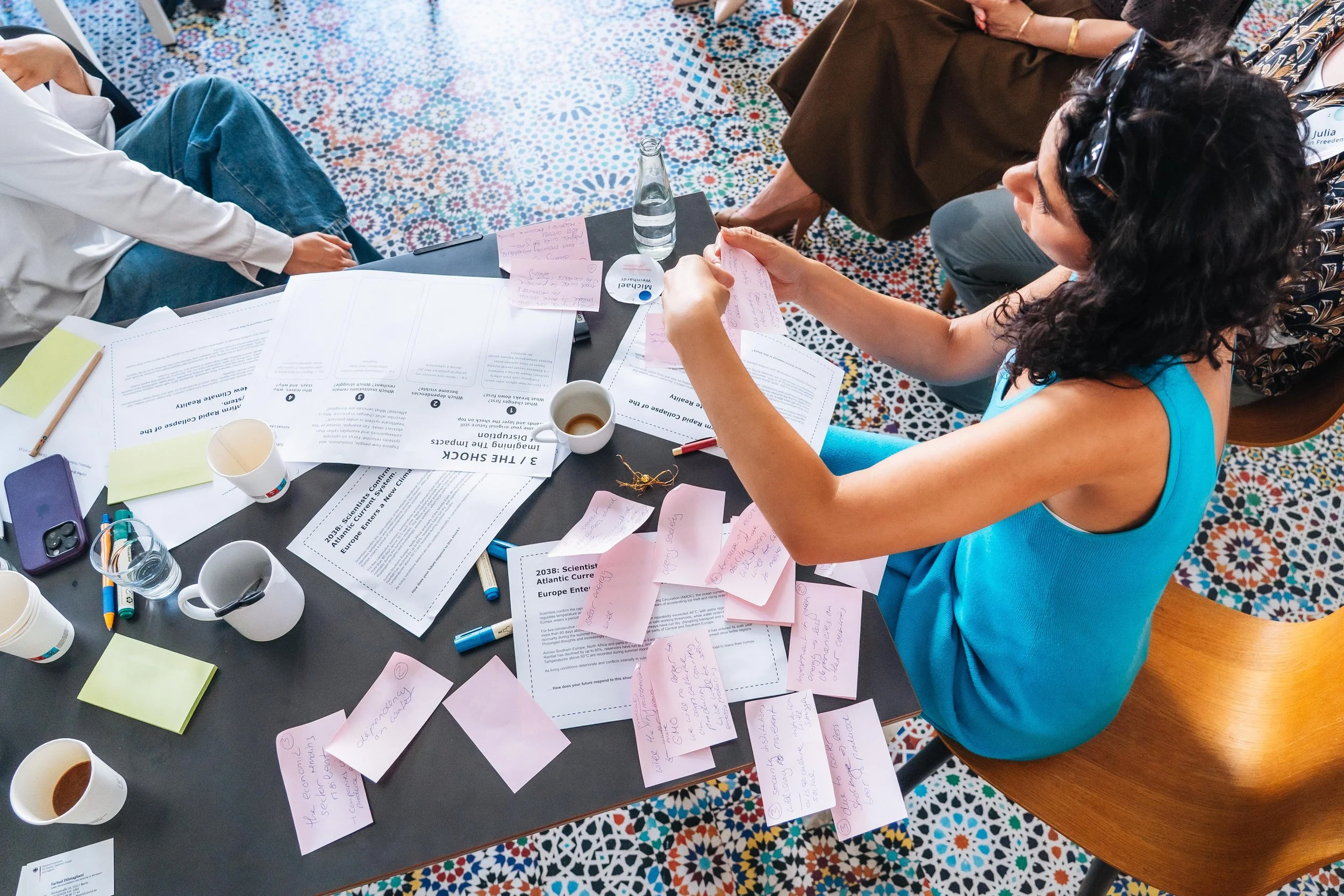
A core feature in the project is the interplay between human imagination of futures and AI‑generated futures. Participants engage in scenario development through creative exercises, storytelling, speculative mapping, while also experimenting with generative AI tools that can visualize, simulate, inspire, or extend their ideas.
Rather than treating AI as an oracle, it is used as a co‑creative partner: a tool that can provoke new questions, reveal hidden assumptions, and support more imaginative scenario building. This reciprocal process highlights both the possibilities and limitations of artificial as well as human intelligence in shaping migration futures.
The project also critically examines the ethical, political, and epistemic implications of using AI in migration research and governance.
AN INTERNATIONAL EVENT SERIES
Future Labs in Berlin, Accra, Singapore, and Toronto
Through an international traveling series of Future Labs (workshops at four different locations), the project combines future-oriented thinking, artistic exploration, and interdisciplinary dialogue. Each Lab focuses on a major global trend shaping mobility:
Berlin (24–26 June 2026) — Aging Societies
Hosted by Deutsches Zentrum für Integrations- und Migrationsforschung (DeZIM), Futurium and Migration Matters e.V.Accra (17 November 2026) — Climate Change and Mobility
Hosted by the University of Ghana, Centre for Migration StudiesSingapore (25–27 April 2027) — Globalized Cities and Urban Futures
Hosted by the National University of Singapore, Asia Research InstituteToronto (22–23 October 2027) — Placeless Work and Digital Mobility
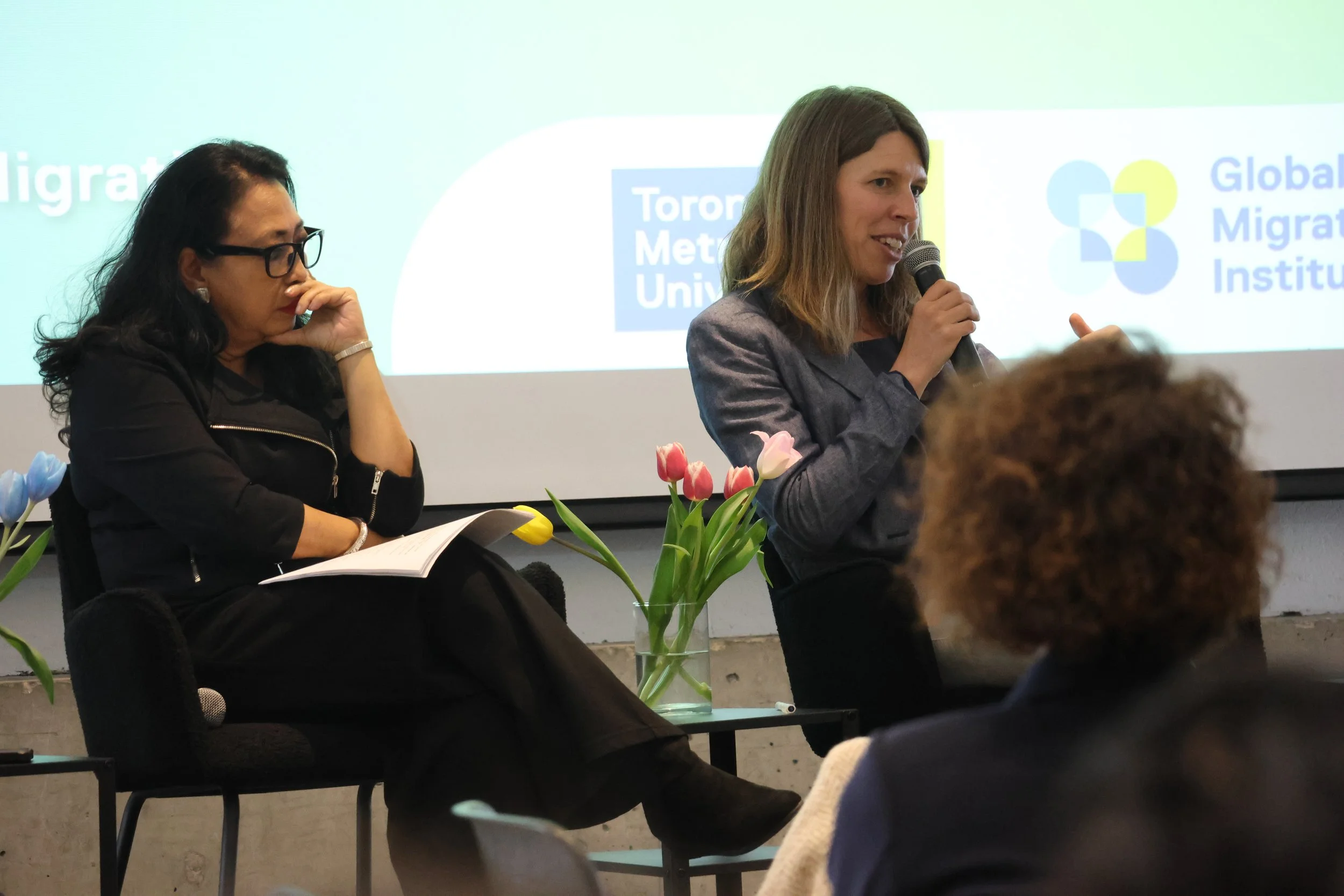
Hosted by the Aga Khan Museum and co‑organized with Toronto Metropolitan University, Global Migration Institute
Across these sites, participants will co‑create future scenarios, produce artistic and speculative outputs, and examine how advanced digital technologies, from AI to virtual mobility platforms, may reshape migration pathways and governance systems. The Labs and further exchanges also strengthen a global network capable of responding better to emerging mobility challenges with creativity, foresight, and justice‑oriented thinking.
KEY THEMES AND SPECIFIC REGIONAL FOCUS
How migration relates to other future trends
The project aims to explore how migration intersects with major global transformations, including:
Climate change and the emergence of new mobility trajectories in regions like West Africa and Southeast Asia
Demographic aging and labor mobility in Europe and Southeast Asia
Urbanization and the growth of globalized cities, especially in rapidly expanding Asian and African cities
Digitalization and placeless work, enabling new forms of virtual mobility and transnational livelihoods
Inequality and governance, shaping who can move, who must move, and who is immobilized
Each regional Lab grounds these themes in local realities, ensuring that global futures are informed by situated knowledge and diverse lived experiences.
OUTPUTS AND KNOWLEDGE TRANSFER
An exhibition of future imaginaries and NEW ideas to inspire research and practice
The Future Imaginaries of Migration project will generate a rich set of outputs designed to circulate across academic, policy, and public spheres. These include:
An exhibition at the Aga Khan Museum in Toronto showcasing visual and narrative future imaginaries created across the four Labs
A digital archive on futureimaginaries.org showcasing discussed scenarios, artworks that have inspired the debate or emerged from it, and AI‑generated materials
Public events, workshops, and dialogues in each host city
Academic publications advancing interdisciplinary approaches to migration futures
Together, these outputs aim to inspire new research agendas, inform policy debates, and broaden public understanding of how human mobility may evolve in the decades ahead.