
TOPICS
4 Topics - 4 Labs
Each of the four Future Labs will focus on a migration issue:
Future Lab#1 BERLIN
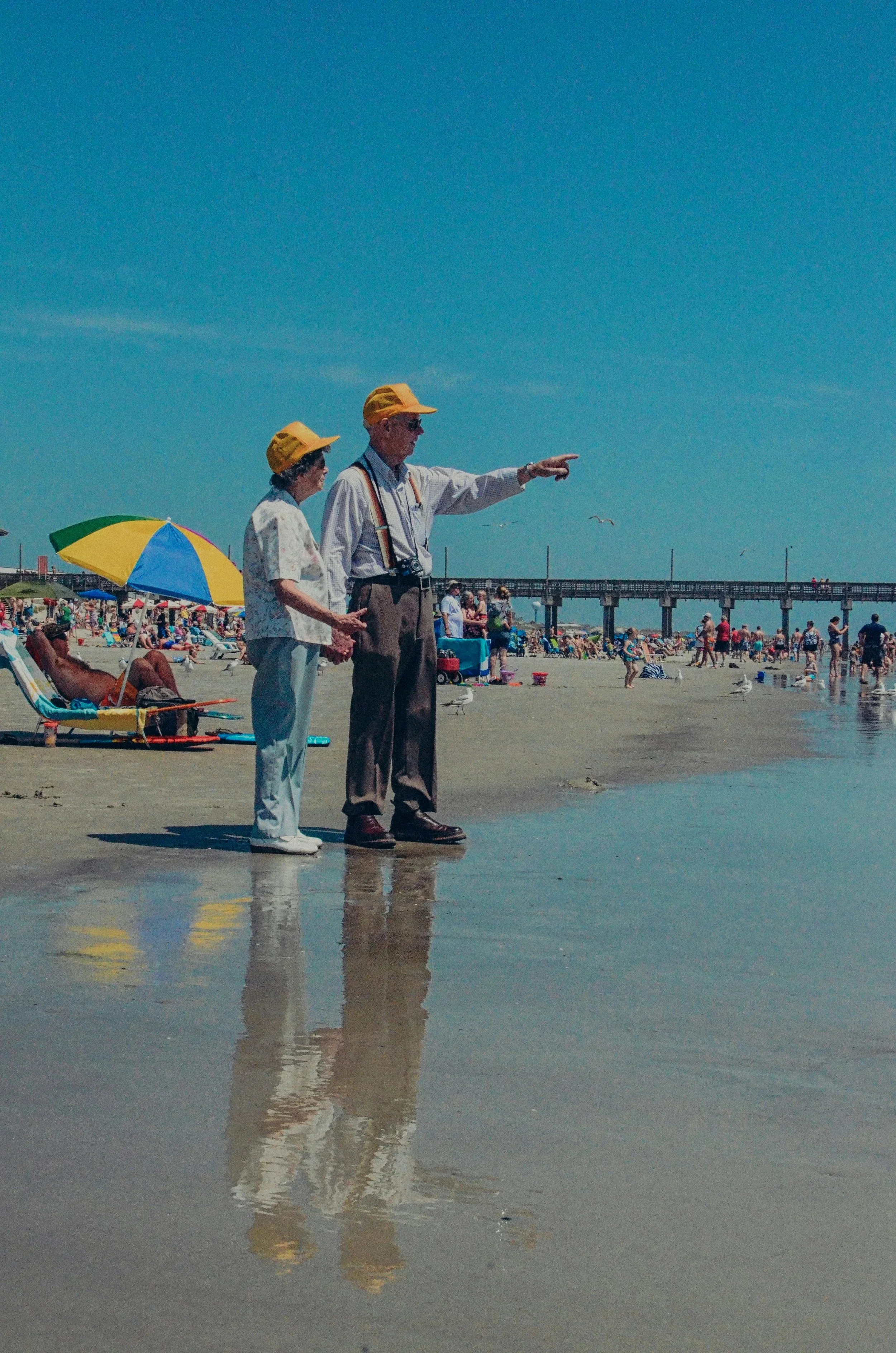
AGING SOCIETIES
The world is aging unevenly. While some regions remain demographically young, the Global North – Europe in particular – is facing a rapid contraction of its working-age population.
-
By 2050, for instance, over a third of Germany's population will be aged over 60, with the proportion of the very elderly (those over 80) rising to 10%. Consequently, shifting intergenerational dynamics, rising care needs and labor shortages mean that migration will be crucial to Europe’s future.
The first FutureLab (June 2026) in Berlin will focus on the role of mobility in aging societies, exploring different scenarios of how demographic change and migration might interact over the coming decades. The exploration will address deeper questions:
• What forms of mobility will emerge as Europe competes for younger talent?
• How will care systems function as domestic workforces shrink?
• How might social cohesion in Europe evolve as societies simultaneously age and become more diverse?
The Berlin FutureLab will examine developments affecting older people with limited mobility and increased care needs. And it will examine developments and implications for younger generations calling for a new intergenerational social pact and going beyond a purely utilitarian approach to migration.
Future Lab#2 ACCRA
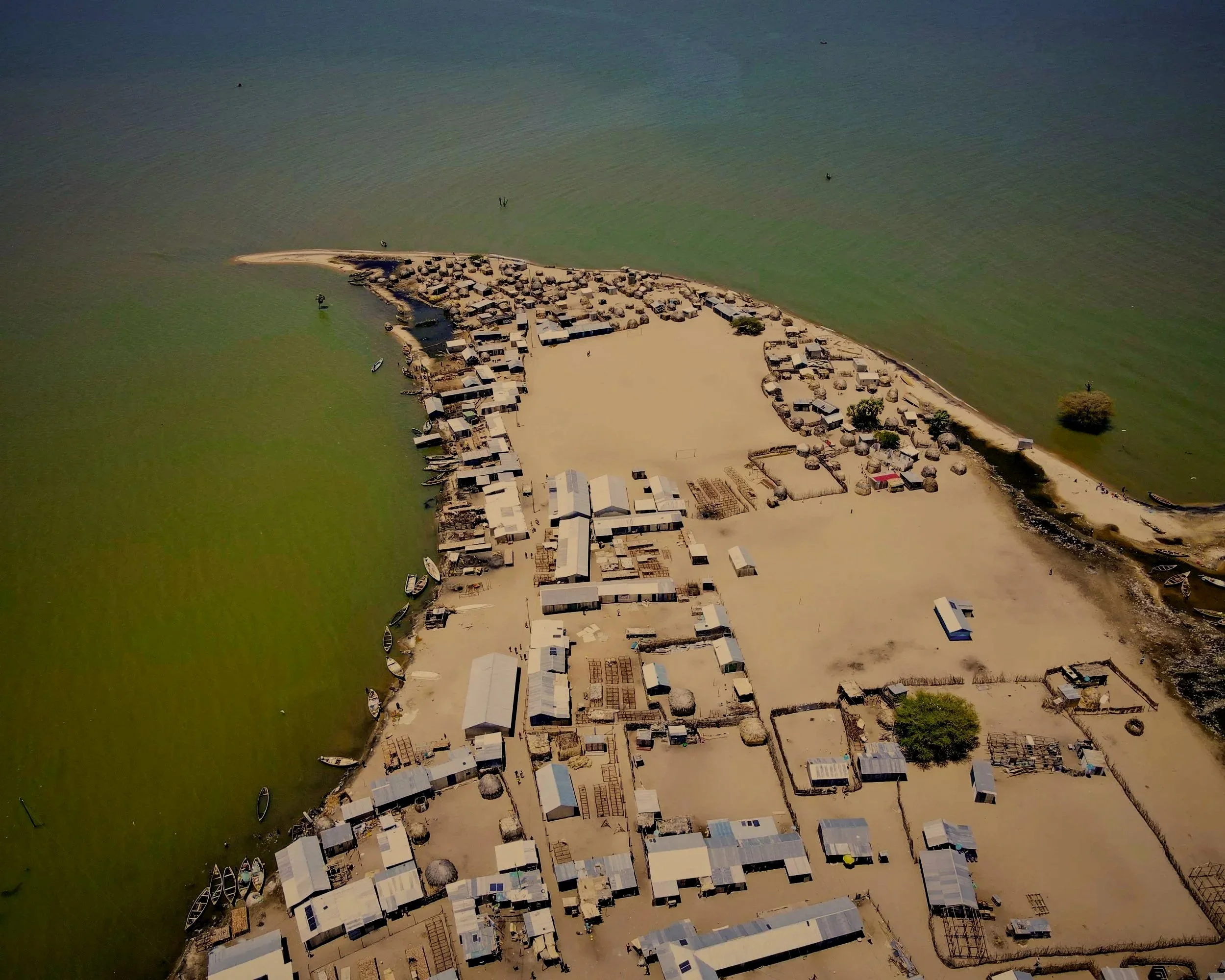
CLIMATE CHANGE
Climate change is not only altering landscapes—it is reshaping the conditions under which people decide where to live, how to move, and how to build futures in the face of accelerating environmental disruption.
-
Rising temperatures, erratic rainfall, coastal erosion and flooding are calling the habitability of entire regions into question and transforming the daily lives of their inhabitants. In many parts of Africa, for example, where infrastructure is often inadequate and climate shocks arrive with little warning, these pressures not only push people across borders, but also generate complex patterns of intra-regional and internal migration as families relocate temporarily, seasonally or permanently in search of safety, better livelihoods and stability.
In Accra, a city at the intersection of rapid urbanization and climate vulnerability, the second Future Lab (November 2026) will focus on the similarities and differences in mobility patterns influenced by climate change and explore what climate-related mobility might look like in the coming decades:
• To what extent can technology-driven adaptation measures in specific regions permanently delay tipping points?
• What international legal protection mechanisms and humanitarian corridors need to be developed for people who are trapped in uninhabitable areas and who remain invisible in the global migration discourse?
• How is the migration of young people from rural areas to globalized cities worldwide changing the labor market and housing situation in those cities? How will urban regions absorb or redirect movement?
The FutureLab in Accra creates space to map these possibilities and consider pathways toward more just and anticipatory responses to climate‑related mobility.

Future Lab#3 SINGAPORE
GLOBALIZING CITIES
Mega‑cities worldwide are growing at a rapid pace. They are transforming the very conditions of mobility, opportunity, and (in)equality.
-
Residents of these burgeoning cities navigate dense traffic, polluted air, and overstretched systems, while the poorest often face mobility options no better than those of generations past.
While lower‑skilled migrants sustain the everyday labor that keeps urban structures running – often under precarious conditions – globalizing cities are particularly appealing to high-skilled knowledge workers and digital nomads from around the world.
The third FutureLab (April 2027) explores these tensions by asking how globalized cities will evolve in an era of instant connectivity and emerging virtual spaces:
• What happens to migration when work, services, and social life increasingly unfold online?
• How will cities manage the coexistence of hyper‑mobile elites and migrants whose movement is tightly constrained?
• What new forms of urban belonging or exclusion might emerge as digital and physical infrastructures intertwine?
Taking this as its starting point, the FutureLab in Singapore sets out to understand how urbanization, technology and migration will shape the next generation of global cities particularly in Asia.

Future Lab#4 TORONTO
PLACELESS WORK
With advanced digital technologies enabling work from virtually anywhere, mobility is no longer solely driven by economic necessity, family connections, or environmental factors.
-
Individuals are starting to move – or choose not to move – because their jobs come along with them. Digital nomadism is transforming migration in ways that traditional models cannot fully capture, blurring the distinctions between migration, mobility, and remote presence.
This shift raises important questions for migration research:
• What does it mean to migrate if your livelihood isn't tied to a specific location?
• How do communities and our sense of community change when some people are highly mobile while others remain rooted but globally connected?
• How do governments and social systems adapt to people whose work, identity and sense of belonging span multiple borders in real time, and who are not confined to a single physical location?
The fourth FutureLab (October 2027) in Toronto views digital nomadism as a significant force shaping the future of mobility. Participants are encouraged to investigate how instant connectivity and platform-based work are changing the reasons why in the future people move, or don't move any more.

FUTURES THINKING
Futures Thinking and Advanced Digital Technologies will be used as overarching lenses and tools to encourage interdisciplinary research practices and support generating new knowledge about potential futures of migration.
Why Migration Research Needs Futures Thinking
We are living in a moment defined by rapid change. Climate disruptions, political instability, and technological acceleration are reshaping daily life in ways that are difficult to predict. Yet when we try to understand migration, we continue to rely on instruments built for a steadier world. The tools we use still assume stability. They look for linear paths in a landscape that is anything but linear. They cannot keep pace with the speed, volatility, and complexity of the present. This gap becomes visible in everyday decisions.
-
Futures studies helps us recognize this. As scholars like Wendell Bell and Joseph Voros have long argued, the field is not about predicting what will happen, but about exploring how different futures might unfold and how present-day actions can shape long-term possibilities. It invites us to loosen our grip on certainty and make room for possibility.
Aspirations Shape Movement
Migration begins long before a border is crossed. It begins with an aspiration, a sense that life could be different from what it is now. As Hein de Haas notes, people move not only because they have the means to do so, but because they want to pursue futures they believe are possible. These aspirations are shaped by family, community, opportunity, and the stories people tell themselves about what might lie ahead.
Futures thinking helps us understand this imaginative work. It shifts our attention from treating migration as a reaction to crisis toward understanding it as a forward-looking process rooted in hope, strategy, and agency.
Understanding Migration Requires Many Ways of Knowing
No single discipline can explain the future of mobility. Migration is shaped by climate, politics, economics, technology, culture, and personal history, all interacting at once. This complexity is why the project Future Imaginaries of Migration brings together researchers, frontline workers, artists, and community partners.
Futures studies reflects this same openness. Bell described it as a field that draws on “the scientific, scholarly, and rhetorical methods of any discipline,” while Popper and Poli emphasize that futures work benefits from multiple ways of knowing, from evidence-based analysis to creative exploration.
When these perspectives come together, we gain a more complete picture of how mobility is changing and how people imagine their futures.
Imagination Is Part of Decision-Making
Migration governance often treats people as passive recipients of policy. They are counted, categorized, and managed. But every migrant is already engaged in futures thinking. Every decision they make is shaped by anticipation and by the futures they believe are possible.
Futures scholars like Soheil Inayatullah and Mathias Czaika remind us that anticipation is a form of agency. It involves using imagined futures to inform present-day choices. Recognizing this, shifts how we understand mobility. It reminds us that migration is not only a response to external pressures but also a proactive, intentional process shaped by human judgment and hope.
Open Futures, Not Fixed Ones
Many of the futures methods used in Future Imaginaries are intentionally open-ended. Visioning, Causal Layered Analysis, participatory foresight, and anticipatory imagination do not aim to predict outcomes. Instead, they help us understand how people see the future, what they fear, what they hope for, and what assumptions shape their decisions.
These approaches surface the deeper stories that influence how societies imagine mobility and belonging. They help us ask important questions.
• How do migrants imagine their futures.
• How do policymakers imagine the futures of others.
• Which futures are encouraged. Which are dismissed.Open-ended methods are ideal for participatory research designs and situations where ethical reflection and inclusion are crucial. Their strength lies in creating a space for dialogue about the future, rather than limiting it to a single expected outcome.
Creativity Helps Us See What Data Cannot
Data helps us understand patterns, but it cannot fully capture the emotional and symbolic dimensions of migration. Through storytelling, visual art, performance, and speculative work, art offers alternative perspectives, making visible the lived experience of uncertainty and the imaginative work that underpins mobility.
Speculative and futurist movements challenge oppression and envision diverse futures, often drawing on ancestral knowledge. Afrofuturism and Indigenous Futurism show how creativity can expand our sense of what is possible and offer alternative visions of belonging and community.
In this project, artists are researchers in their own unique way, using creative tools and diverse languages. They are essential partners who help us understand migration in ways that numbers alone cannot.
Building Preparedness Instead of Reacting to Crisis
The world does not benefit from more reactive, crisis-driven migration policy. It requires approaches that are thoughtful, inclusive, and forward-looking. Futures studies offers a way to move in this direction. It can shift migration research beyond reactive forecasting toward anticipatory, participatory, and ethically grounded strategies that embed plural realities and migrant agency.
When futures methodologies are applied thoughtfully and aligned with clear research aims, they allow us to explore not only what is likely to occur, but also what could happen, what is desired, and whose futures are being imagined. This creates a more anticipatory and analytically sound migration scholarship, one that addresses uncertainty without reducing it to prediction.
The future is not something that arrives fully formed. It is shaped by the choices we make now. By bringing together data and imagination, analysis and creativity, we can build systems that do more than respond to uncertainty. We can build systems that help people navigate it with dignity and possibility.
Future Imaginaries of Migration exists to support this shift, creating spaces where migrants, artists, researchers, and communities can imagine and shape the futures they want to live in.
by Lara El Mekaui